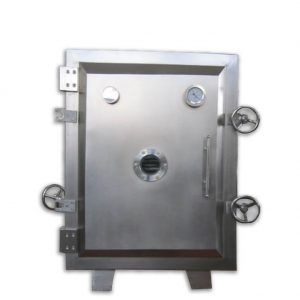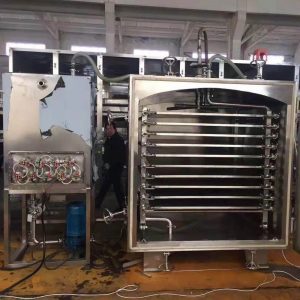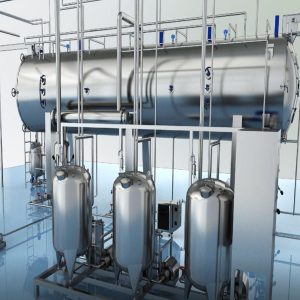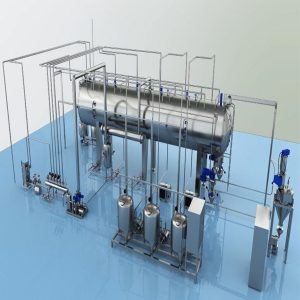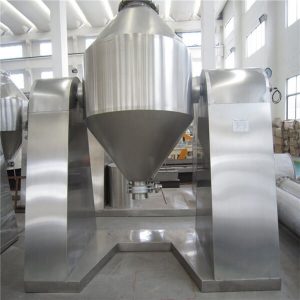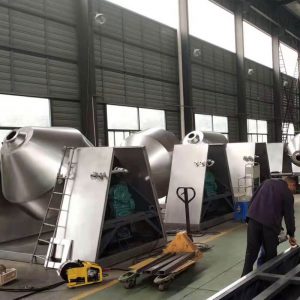
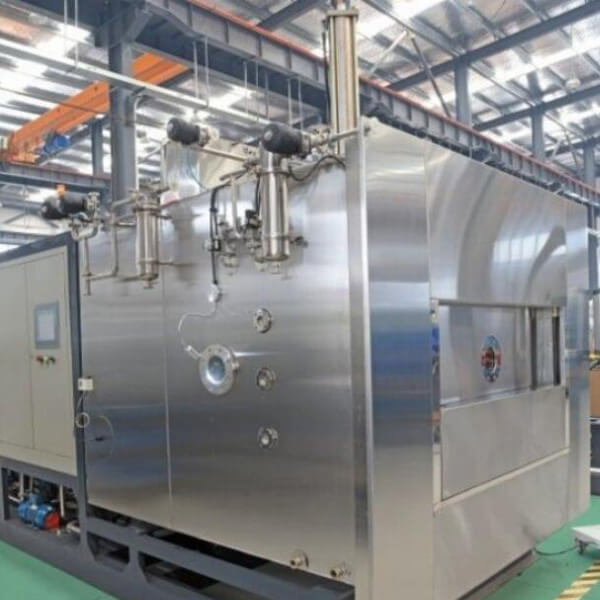
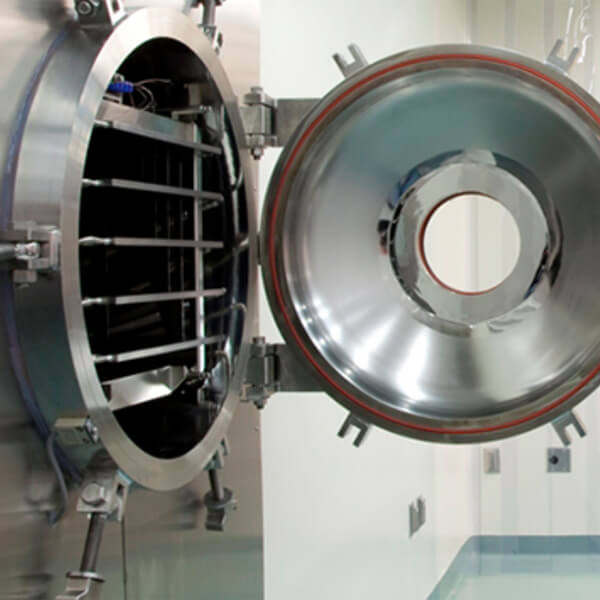
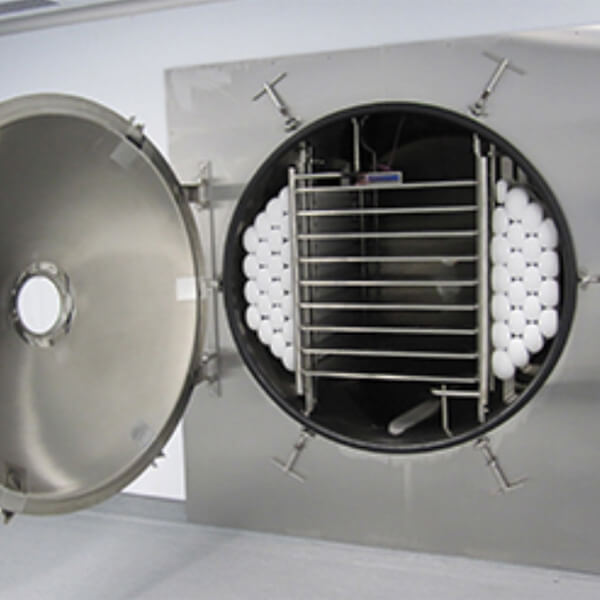
Select vacuum freeze drying when the product can be frozen and moisture must be removed by sublimation under reduced pressure. It is a batch cycle that must be evaluated against product quality targets, loading format and the required freezing, condenser and vacuum duty. If freezing and sublimation are not necessary, compare lower-temperature continuous vacuum-belt drying or batch vacuum-oven drying. Confirm product composition and form, batch load, fill depth or container, freezing behavior, initial and target moisture, allowable product temperature, cycle endpoint, condenser load, vacuum requirement, cleaning or containment needs, utilities and installation constraints before equipment selection.
Working Principle
It is to quickly freeze the liquid in the material into solid ice, and directly vaporize the water from the solid-state under the premise of insolubilization of the ice, and continuously remove the vapor, so as to achieve the purpose of drying the material.
Traditional drying can cause the material to shrink, destroying cells. The structure of the sample is not destroyed during freeze-drying because the solid components are supported by the solid ice in their place. As ice sublimates, it leaves pores in the dry leftover material. This preserves the integrity of the product’s biological and chemical structure and its activity.
Applications
- Food industry: vacuum freeze-drying technology can be used for drying fruits and vegetables, meat and poultry, aquatic products, condiments, instant foods and famous and high-quality specialty products, etc. The water is good, the finished product is easy to store and transport, the cost is reduced, and the shelf life is prolonged.
- Nutrition and health care: The vacuum freeze-drying process is used in drying nutritional and health care products such as royal jelly, ginseng, turtles, turtles, and earthworms, which makes people believe that the nutritional products are pure and natural.
- Pharmaceutical industry: The vacuum freeze-drying method can be applied to the dehydration and preservation of Chinese and Western medicines such as serum, plasma, vaccines, enzymes, antibiotics, hormones, etc.
- Biological research: Long-term preservation of blood, bacteria, arteries, bones, skin, cornea, nerve tissue and various organs using vacuum freeze-drying technology can be regenerated only by supplying water during use and still maintain their biophysical properties.
- Others: For example, it can be used in aerospace insulation ceramic production, preservation of wood and silk products in archaeology, specimen production, special material preparation, etc., and can receive unique effects.
Vacuum Freeze Dryer Selection Inputs
Use the following project data to define the freeze-drying basis. Values must be confirmed for the representative material and intended operating cycle.
| Project input | Why it matters |
|---|---|
| Feed form and batch loading | Defines tray, container, loading and heat-transfer requirements. |
| Initial and target moisture | Establishes the moisture-removal duty and acceptance target. |
| Product-temperature limit | Guides shelf temperature, vacuum and cycle development. |
| Batch quantity and production schedule | Supports chamber sizing and cycle planning. |
| Expected ice or condenser load | Supports condenser and refrigeration evaluation. |
| Available utilities | Confirms electrical, cooling-water, refrigeration and vacuum interfaces. |
| Cleaning, materials and validation scope | Defines product-contact surfaces, documentation and project responsibilities. |
Engineering boundary: a final cycle, capacity or product result cannot be confirmed from a generic product page. Representative data, project calculations or trials and agreed acceptance criteria are required.
LYOPHILIZATION PROCESS
Vacuum Freeze-Drying Cycle Overview
Freeze drying removes water through a controlled cycle rather than one fixed operating point. The product is first frozen, then chamber pressure and shelf heat are controlled so ice can sublime during primary drying. Secondary drying reduces a portion of the remaining bound moisture, while the condenser captures vapor from the chamber.
1. Freeze the Product
Freezing rate, final freezing temperature, product depth and formulation affect ice structure and the later drying path.
2. Primary Drying
Vacuum and shelf heat are controlled to drive sublimation while keeping product temperature within the confirmed limit.
3. Secondary Drying
The cycle continues at suitable conditions to reduce remaining bound or adsorbed moisture toward the target.
4. Condense Vapor and End the Cycle
The condenser and refrigeration system capture vapor, after which the chamber is returned to the required end condition.
CYCLE AND EQUIPMENT INPUTS
Vacuum Freeze Dryer Selection Requirements
Product and Formulation
Composition, concentration, batch size, freezing behavior, collapse or eutectic limits and sensitivity to oxygen or temperature.
Loading Configuration
Tray or vial format, fill depth, container dimensions, shelf area, loading method and batch uniformity requirements.
Cycle and Condenser Duty
Freezing profile, primary and secondary drying targets, critical product temperature, vapor load and condenser capacity.
Quality and Facility
Residual moisture, reconstitution, cleanliness or sterility program, controls, data needs, utilities, room classification and installation country.
Request a Vacuum Freeze-Drying Review
Send product, batch, loading, critical-temperature and quality requirements for an application-specific review.
TECHNICAL QUESTIONS
Vacuum Freeze Dryer FAQs
What products can be evaluated for vacuum freeze drying?
Freeze drying can be evaluated for suitable foods, biological materials, pharmaceutical formulations and specialty products when preserving structure or controlling low-temperature dehydration is important. Formulation, freezing behavior, collapse or eutectic temperature and final quality target must be studied.
What are primary and secondary drying?
Primary drying removes ice mainly by sublimation under controlled vacuum and shelf heat. Secondary drying removes a portion of the remaining bound or adsorbed moisture by desorption. Product temperature and chamber pressure are controlled according to the formulation and cycle.
Does freeze drying guarantee biological activity, sterility or shelf life?
No. Activity retention, sterility assurance, residual moisture, reconstitution and shelf life depend on formulation, freezing, cycle development, equipment, packaging, handling and validation. Pharmaceutical or biological use requires the applicable quality and regulatory program.
What information is needed for a vacuum freeze dryer proposal?
Provide product composition and concentration, batch size, fill depth and container, freezing behavior, target residual moisture, critical product temperature, cycle expectations, condenser load, cleanliness or sterility requirements, utilities, room classification and installation country.