Working Principle
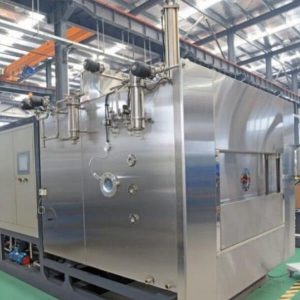
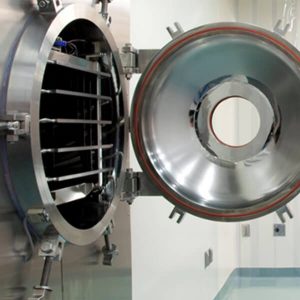
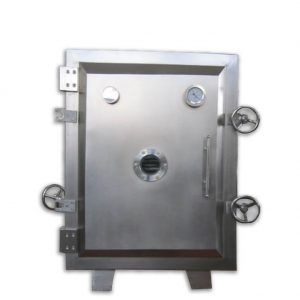
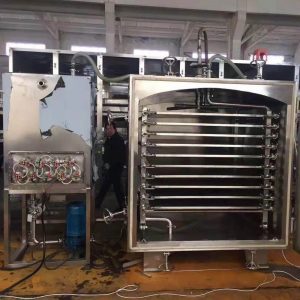
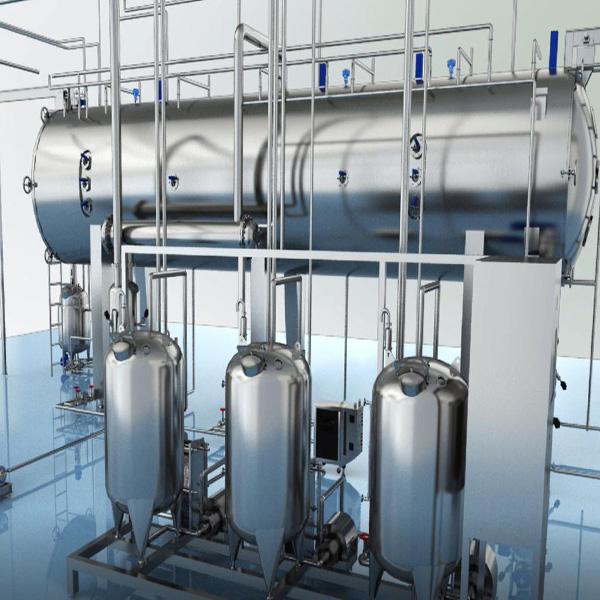
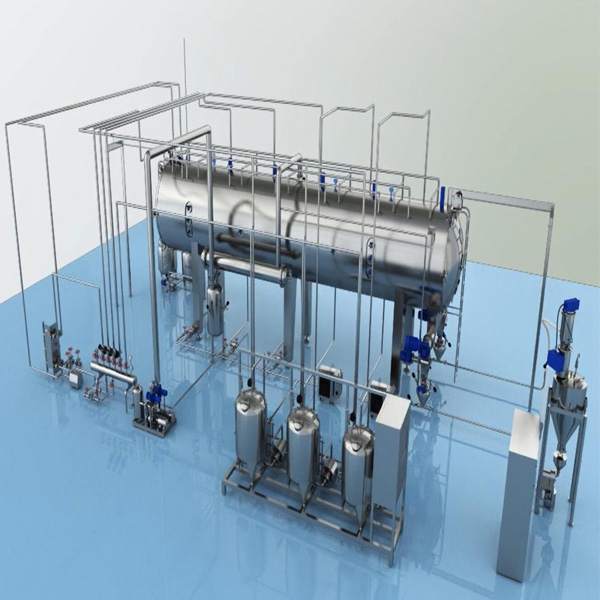
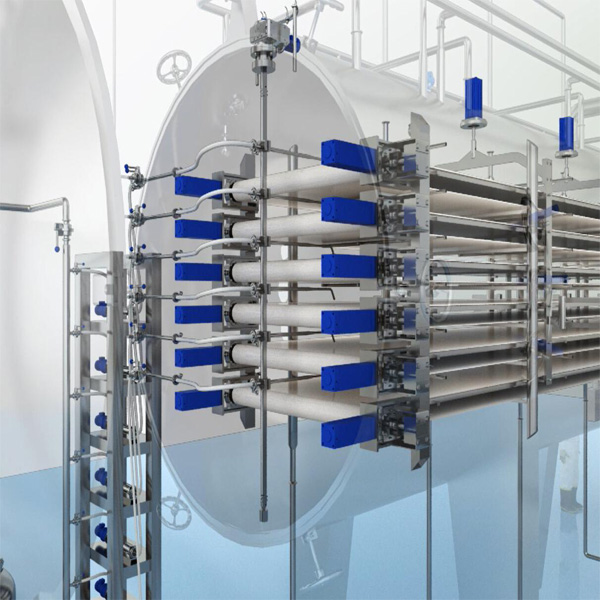
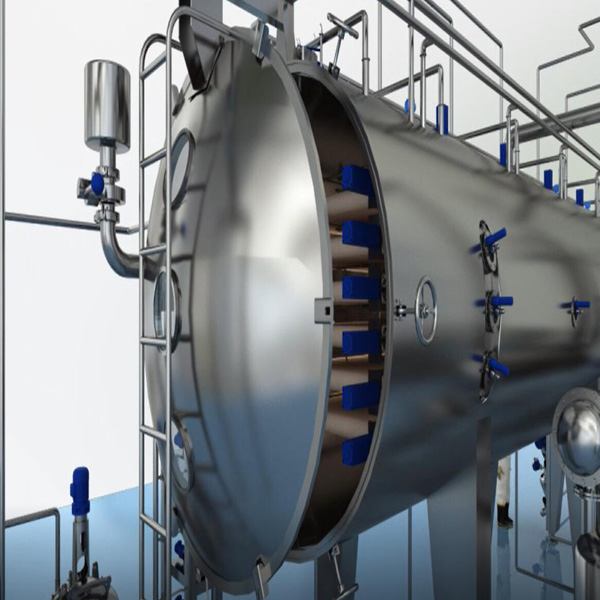
It is a vacuum drying equipment with continuous feeding and continuous discharging. The raw material to be dried is transported into the dryer by the feed pump and evenly distributed on the conveyor belt by the distributor, and the boiling point temperature of the material is lowered by the high vacuum, and the moisture of the liquid raw material is directly sublimated to the vapor, and the conveyor belt is on the heating plate.
It runs at a constant speed, and the heat source in the heating plate can be heated by steam, hot water or electric heating. Through the operation of the conveyor belt, from the evaporation and drying at the front end to the cooling discharge at the back end, the temperature range from high to low can be adjusted according to the characteristics of the material., the discharge end is equipped with a specific vacuum pulverizing device to achieve finished products of different particle sizes, and the dried powder can be automatically packaged or processed later.
Applications
It is suitable for drying maltose, malt milk, sucrose, beet sugar, dextrin, oatmeal, corn steep liquor, rice flour, honey, coffee and other sugars and various substances with high sugar content. The high-concentration, high-viscosity Chinese herbal extract solves a major problem.
This machine is not only suitable for sugar food and traditional Chinese medicine extracts, but also suitable for low-temperature drying of various liquid paste-like raw materials such as Chinese and Western medicines, polysaccharide medicines, bioengineering, chemical raw materials, food additives, etc., Easy to agglomerate, thermoplastic, heat-sensitive products drying; welcome new and old customers to bring materials to the company to test the machine.
CONTINUOUS VACUUM PROCESS
How Continuous Vacuum Belt Drying Works
A controlled liquid or paste feed is introduced into the vacuum chamber and distributed onto a moving belt. Reduced pressure lowers the boiling temperature of the volatile component, while successive belt zones provide the required heating, drying and cooling profile. The dried layer is then separated from the belt and discharged for downstream handling.
1. Meter and Distribute Feed
The feeding and spreading system is selected from viscosity, solids content, foaming, stickiness and required layer thickness.
2. Heat Under Vacuum
Heating zones supply energy while the vacuum system removes vapor at conditions confirmed for the material.
3. Cool and Stabilize
Later belt zones may cool the dried layer before separation, depending on product behavior and discharge requirements.
4. Discharge Product
The dried material is removed and may be sized or transferred under controlled conditions for the next process step.
ENGINEERING SELECTION
Vacuum Belt Dryer Selection Requirements
Feed Properties
Composition, solids content, viscosity, density, foaming, stickiness, thermal sensitivity and solvent information.
Vacuum and Vapor Duty
Moisture or solvent load, boiling behavior, condenser duty, vacuum level, leakage allowance and recovery needs.
Belt and Thermal Profile
Layer thickness, belt speed, heating and cooling zones, residence time and product release from the belt.
Product and Plant Target
Final moisture, particle form, containment, cleaning, utilities, footprint, site classification and installation country.
Request a Vacuum Belt Drying Review
Send feed, thermal-limit, vacuum-duty and product-target data for an application-specific review.
TECHNICAL QUESTIONS
Vacuum Belt Dryer FAQs
What feeds can be evaluated in a vacuum belt dryer?
Vacuum belt drying can be evaluated for suitable pumpable liquids, concentrates, extracts and pastes that can be distributed as a controlled layer on the moving belt. Feed rheology, foaming, stickiness, solvent content, thermal sensitivity and final product behavior must be reviewed.
How is a vacuum belt dryer different from a vacuum oven or freeze dryer?
A vacuum belt dryer is designed for continuous feeding, staged heating or cooling and continuous discharge. A vacuum oven is typically batch operated, while freeze drying uses a frozen product and sublimation. Product quality, feed form, throughput and process route determine the appropriate method.
Are the published temperature, cost and powder recovery statements guaranteed?
No. Temperature range, residence time, operating cost, powder yield and cleaning performance depend on the actual feed, solvent or moisture load, vacuum system, utilities, belt loading, product target and final equipment configuration. They require application-specific confirmation.
What information is needed for a vacuum belt dryer proposal?
Provide feed composition, solids content, viscosity and density, feed rate, moisture or solvent to remove, thermal limit, foaming and stickiness behavior, target moisture and particle form, cleaning requirements, utilities, installation country and any hazardous-area data.