Selecting a fluid bed dryer manufacturer requires more than comparing nominal throughput. The proposed system must match the material’s particle behavior, moisture profile, temperature limits, required residence time and downstream handling. A well-defined project brief helps ensure that competing proposals address the same technical requirements.
Define the Material Behavior
Start with representative material information: particle-size distribution, bulk density, initial and final moisture, flowability, stickiness, attrition sensitivity, thermal stability and dust characteristics. These factors influence whether the material can fluidize reliably and whether drying, cooling, agglomeration or a combined duty is appropriate.
Review the Fluid Bed Configuration
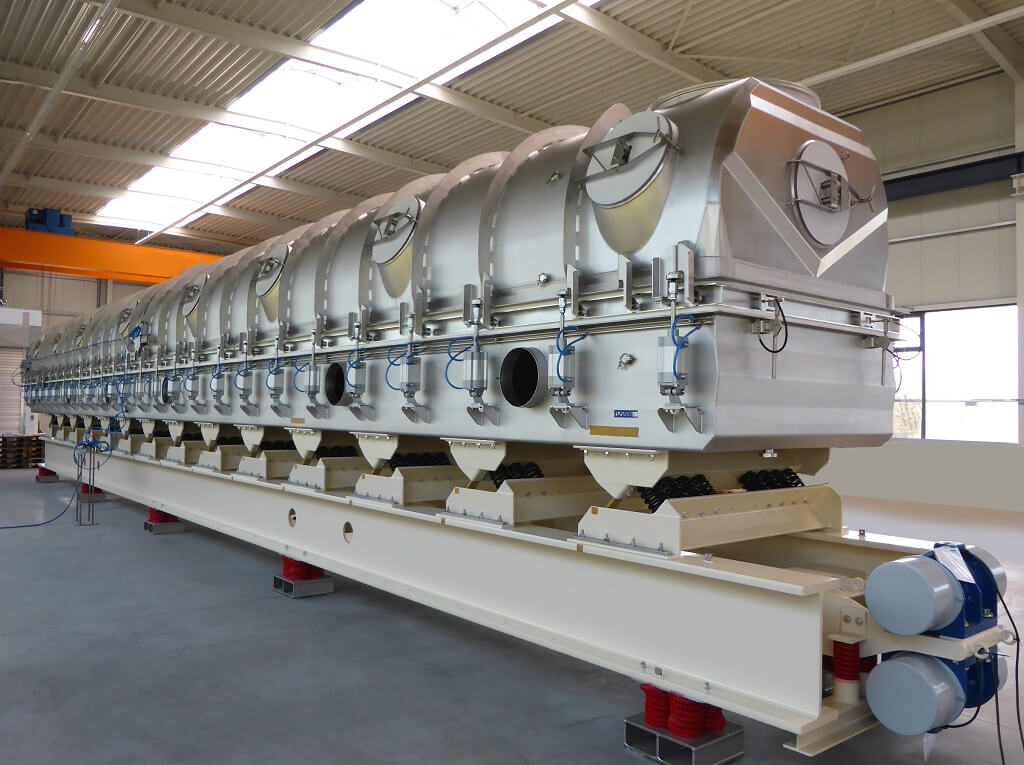
A fluid bed system may include feed conditioning, air preparation, a perforated bed and distributor, vibration or other material-transport features, dust separation, discharge equipment and controls. Ask how the air distribution, bed geometry, feed rate and residence time are matched to the material. The design should also account for fines, entrainment, cleaning access and product recovery.
Evaluate Testing and Scale-Up
For materials with uncertain fluidization behavior, testing with representative feed is valuable. Discuss the intended trial conditions, the measurements to be taken and how results will inform equipment sizing. The commercial design should identify the process assumptions used for capacity, moisture reduction and product quality.
Compare Safety, Quality and Service Scope
Clarify the scope of supply, material-contact requirements, instrumentation, dust handling, safety review, electrical standards, documentation, commissioning and support. The appropriate design may differ for food, chemical, mineral or pharmaceutical applications. A comparable technical specification makes exclusions and optional items visible before procurement.
Questions to Include in Your Request
- Which material properties were used to establish the fluidization and drying approach?
- How are air distribution, residence time and product discharge controlled?
- What provisions are included for fines collection, dust handling and cleaning?
- Is testing recommended before a production-scale configuration is finalized?
- What utilities, documentation and commissioning services are included?
Discuss a Fluid Bed Drying Project
Griffin Machinery can review material data, capacity requirements and product targets to help define an appropriate fluid bed drying or cooling configuration. A representative sample and a complete process brief provide the strongest basis for evaluation.
Build a Comparable Fluid Bed Dryer Manufacturer Shortlist
There is no universal “top” supplier for every powder or production line. Compare manufacturers against the same process brief and require evidence that can be reviewed by engineering, quality and operations teams.
Ask for material and fluidization evidence
Share particle-size distribution, bulk density, moisture range, feed form, thermal sensitivity, agglomeration tendency and target final moisture. Ask how the air distributor, residence-time control and product handling address those conditions.
Confirm configuration and project responsibilities
Request a clear scope for the dryer, air handling, heating, filtration, controls, conveying, dust collection, utilities and integration points. Identify who owns process design, testing, installation support, commissioning and training.
Review testing, safety and after-delivery support
Comparable test conditions, sampling methods, acceptance criteria, drawings, manuals, spare-parts support and response procedures make proposals easier to evaluate. Confirm dust, temperature, guarding and interlock requirements with responsible site specialists.
Evidence boundary: this guide does not publish a universal ranking, market-share claim, certification, customer result or performance guarantee. Verify supplier statements against material data, approved scope and signed acceptance criteria.
Prepare a Fluid Bed Dryer Supplier Inquiry
Include material data, feed and discharge rates, inlet and outlet air targets, utilities, floor space, emissions constraints, cleaning requirements, automation interfaces, delivery location and acceptance method. Review fluid bed dryer systems, the working principle, the equipment diagram and project references.
Send Fluid Bed Manufacturer Review Data
Fluid Bed Dryer Manufacturer FAQs
What should be compared first?
Start with material behavior, moisture removal, production duty, air handling and representative testing evidence.
How can proposals be compared fairly?
Use one written process brief and ask each supplier to state assumptions, exclusions, utilities, tests and responsibilities.
Which safety information belongs in the inquiry?
Include dust characteristics, temperature limits, guarding, interlocks, exhaust filtration and site compliance requirements.
What should be requested before purchase?
Request a scope matrix, drawings, utility schedule, controls description, manuals, spare-parts plan, commissioning scope and acceptance criteria.