While spray dryers offer rapid drying and high product quality, they are also energy‑intensive systems – consuming significant thermal energy to evaporate moisture and electrical energy for atomization, air handling, and auxiliary systems.
As energy costs rise and environmental regulations tighten, improving the energy efficiency of industrial spray dryer operations has become both an economic imperative and a sustainability priority.
This article explores practical strategies to reduce energy consumption in spray dryers, from optimizing process parameters to equipment upgrades and heat recovery systems.
Why Energy Consumption Matters
Energy use in spray drying typically accounts for one of the largest operating costs in manufacturing. Thermal energy (from steam, natural gas, or electricity) supplies the heat necessary for evaporation, while fans and atomizers consume electrical energy. Large volumes of hot air are required to achieve product drying and to carry moisture away from the drying chamber.
High energy consumption impacts businesses in multiple ways:
- Operating cost pressure: Energy bills can represent 30–60% of variable production costs in drying operations.
- Environmental footprint: High energy usage increases greenhouse gas emissions—especially when thermal energy comes from fossil fuels.
- Regulatory compliance risk: Stricter energy efficiency standards may result in penalties or require retrofit investments.
Therefore, reducing energy consumption is not only cost beneficial but vital for environmental performance and long‑term competitiveness.
Core Principles for Reducing Energy Usage
Effective energy reduction in spray dryer operations is grounded in three core principles:
- Minimize heat lost to inefficiencies
- Reuse and recover waste energy
- Optimize process conditions for lower energy demand
Below, each principle is explored with specific strategies.
1. Optimizing Process Parameters
Control Inlet and Exhaust Temperatures
The temperatures of incoming drying air and exiting exhaust air are critical.
- Inlet temperature: This influences how much energy is needed to evaporate moisture. While higher inlet temperatures speed up drying, they can also unnecessarily increase energy usage if not matched with feed properties.
- Exhaust temperature: A high exhaust temperature often indicates wasted energy. Lower exhaust temperatures—without compromising product quality—signal better energy use.
Best Practice: Use sensors and control systems to adjust inlet and exhaust temperatures in real time, optimizing them according to feed composition, solids content, and desired powder properties.
Optimize Feed Concentration and Flow Rate
Higher solids content in the feed means less water to remove and less energy required per kilogram of product.
However, pushing solids too high can cause issues like nozzle blockage or poor atomization. The balance lies in:
- Increasing feed concentration within acceptable limits.
- Matching feed flow rate to dryer capacity to avoid unnecessary heat input or drying time.
Nozzle and Atomization Efficiency
The atomizer converts feed into fine droplets. The efficiency of this step affects drying performance and energy consumption:
- Uniform droplet size ensures consistent drying with reduced energy per unit mass.
- Efficient atomizers (e.g., high‑performance centrifugal or ultrasonic atomizers) reduce energy related to compressed air use or mechanical rotation losses.
Actionable Tip: Evaluate atomizer options and routinely inspect nozzles for wear and buildup that can degrade performance.
2. Heat Recovery and Reuse
Install Exhaust Heat Recovery Systems
Spray dryers discharge large volumes of hot exhaust air loaded with latent heat. Recovering that heat can reduce fresh heated air demand.
Common methods include:
- Heat exchangers: Capture thermal energy from exhaust to preheat incoming air.
- Regenerative thermal wheels: Transfer heat between exhaust and inlet air streams with high efficiency.
Result: Up to 30% reduction in fuel demand for air heating systems in some applications.
Use of Recirculation Loops
Partial or full recirculation of dryer air can reduce energy demand:
- Direct recirculation: Mixed with fresh air to reduce overall heating needs.
- Indirect recirculation: Passed through filters and heat exchangers to recover heat without contaminating new air.
When properly controlled, recirculation lowers energy use while maintaining drying performance.
Preheating Feed Liquids
Heating the feed prior to atomization reduces the energy required inside the drying chamber. Preheating can be done using:
- Waste heat from compressors
- Heat exchangers recovering energy from exhaust streams
This strategy is particularly effective when feed properties allow safe pre‑heating without degrading product quality.
3. Improving Insulation and Reducing Thermal Losses
Insulation of Dryers and Ducting
Uninsulated dryer bodies, ducts, and hoppers lose substantial heat to the environment.
- Use high‑temperature insulation materials to minimize thermal losses.
- Seal gaps and inspect insulation regularly to prevent degradation.
Impact: Reduced energy losses result in lower fuel consumption to maintain drying temperature setpoints.
Improve Seals and Minimize Air Leakage
Air leakage around doors, access panels, and duct connections causes heat waste and inefficiency.
- Address worn gaskets and sealing surfaces.
- Implement pressure control systems that reduce unnecessary air movement.
Even small improvements in airtightness can significantly improve energy utilization.
4. Advanced Control and Monitoring Systems
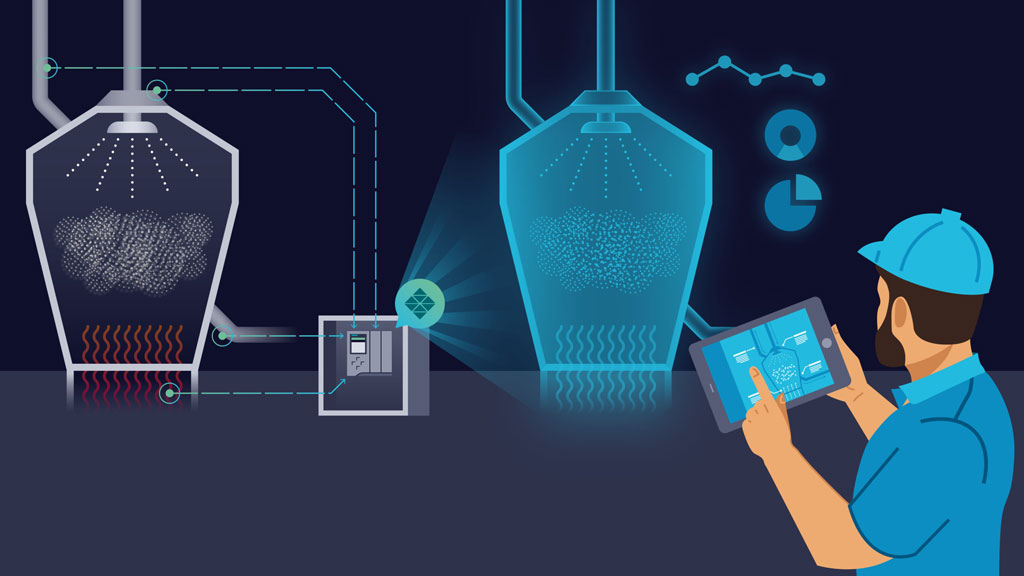
Modern spray dryers benefit significantly from automation and predictive control systems.
Real‑Time Monitoring
Sensors can track:
- Temperature at multiple points
- Airflow rates
- Feed viscosity and solids content
- Exhaust humidity
Monitoring these factors allows operators to adjust process parameters proactively to improve efficiency.
Predictive Control Algorithms
Data‑driven control systems can:
- Predict optimal drying conditions based on historical data
- Minimize energy spikes
- Automatically adjust variables for consistent performance
Investment in smart controls often yields measurable energy savings within months.
5. Auxiliary Energy‑Saving Measures
Efficient Fans and Motors
Fans and blowers contribute significantly to electrical consumption. To reduce energy:
- Use high‑efficiency motors (IE3/IE4)
- Install variable frequency drives (VFDs) to adjust motor speed to actual demand
Outcome: Lower electricity usage without affecting process performance.
Regular Maintenance and Training
Operational inefficiencies often stem from neglected equipment:
- Clogged filters increase fan energy use
- Dirty heat exchangers reduce heat transfer efficiency
Routine maintenance schedules and operator training on energy‑aware practices contribute to sustained energy savings.
Conclusion
Reducing energy consumption in spray dryer operations is both a technical challenge and a strategic opportunity. By optimizing process conditions, recovering waste heat, enhancing insulation, implementing advanced control systems, and carrying out proactive maintenance, companies can achieve:
- Lower operational costs
- Reduced environmental impact
- More stable product quality
ENERGY REVIEW
Build an Energy Baseline Before Changing the Spray Dryer
Energy improvement starts with a consistent production baseline. Record the same product, feed condition and operating period so that energy use is compared against useful powder output rather than against isolated temperature or fuel readings.
Production and product data
- Feed rate, solids concentration and moisture entering the dryer
- Dry powder output, final moisture and acceptable product yield
- Operating hours, start-up and shutdown frequency, and cleaning cycles
Thermal and airflow data
- Inlet and exhaust temperatures under a stable production condition
- Heat-source consumption, electrical load and major fan operating points
- Air leakage, insulation condition, exhaust humidity and pressure observations
Evaluate changes without shifting the problem
Any proposed heat recovery, air recirculation, feed concentration or control change should also be reviewed for powder quality, fouling, emissions, corrosion, cleaning and process safety. A lower energy input is not an improvement if it reduces acceptable product output or creates an unsafe operating condition.
Performance boundary: This article describes general evaluation methods and does not promise a specific percentage reduction. Achievable energy performance depends on the feed, existing equipment, heat source, ambient conditions, operating practice and required powder specification. Changes to temperatures, airflow, recirculation or safety controls require project-specific engineering review.
Related Spray Drying Resources
- Spray Dryer System Components and Design Considerations
- Common Spray Dryer Problems and Solutions
- Industrial Spray Dryer Systems
Review Your Spray Dryer Energy Data
Send the feed and powder targets, production rate, heat source, operating temperatures, utility data and the performance issue you want to evaluate.
Spray Dryer Energy FAQs
What should be measured before an energy optimization project?
Record feed condition, acceptable powder output, final moisture, operating hours, temperatures, heat-source use and major electrical loads under a consistent production condition.
Does a lower exhaust temperature always mean lower energy consumption?
No. Exhaust temperature must be interpreted with feed rate, moisture load, airflow, product moisture and deposit risk. One reading alone does not establish total process efficiency.
Can exhaust heat always be recovered?
Not always. Recovery feasibility depends on temperature, humidity, powder carryover, corrosion, fouling, cleaning, emissions and the availability of a useful heat sink.
What information is useful for an engineering review?
Provide the material and feed data, production rate, powder target, heat source, temperatures, utility consumption, operating schedule and any quality, fouling or emission constraints.