
Select the Drying Route From the Feed and Product Duty
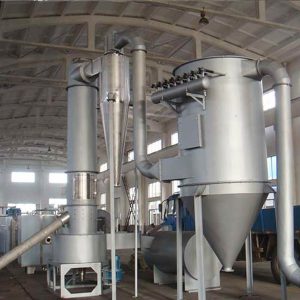


Paste or filter cake
A spin flash dryer may be evaluated when the feed can be metered, dispersed and dried continuously. Confirm rheology, stickiness, feed consistency, drying curve, particle target, temperature limit, abrasion and collection requirements.
Pumpable slurry or solution
A spray drying route may be considered when atomization and particle formation are part of the required process. Feed solids, viscosity, particle distribution, bulk density, morphology target and contamination control influence the atomizer and collection system.
Free-flowing powder or granules
A fluid-bed system may suit a material that can fluidize without unacceptable attrition or carryover. Particle size, density, moisture, fluidization behavior, exhaust filtration and cooling must be reviewed together.
Continuous conduction duty
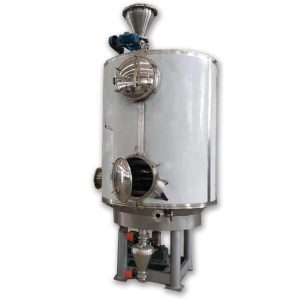
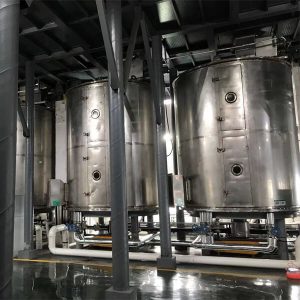
A disc dryer may be evaluated for a free-flowing material compatible with indirect heating and controlled residence. Feed behavior, plate loading, heating medium, vapor handling, cooling and cleanout requirements define the configuration.
Contained or heat-sensitive batch
A vacuum drying system may be considered when lower-temperature evaporation, contained handling or vapor recovery is required. Confirm solvent properties, pressure, foaming, agitation, condenser duty, oxygen limit and process hazards.
Moisture, Contamination, Atmosphere and Cooling

- Feed characterization: exact compound, composition, feed form, initial moisture or solids, particle size, density, viscosity, stickiness and representative sample.
- Product acceptance: target moisture, particle distribution, bulk density or morphology, allowable temperature and downstream handling requirement.
- Contamination control: permitted contact materials, wear metals, cleaning method, cross-contamination limits and required surface finish.
- Process and safety: dust explosibility, solvent, oxygen limit, inert-gas need, toxicity, emissions, filtration, containment and applicable site classification.
- Capacity and site: batch or hourly duty, operating schedule, heat source, power standard, cooling water, dry-air or nitrogen supply, plant space and installation country.
Specify materials of construction, filtration, cleaning, sampling, transfer, cooling, storage atmosphere, packaging interface and environmental controls. The dried product path should be reviewed through discharge and downstream handling.
Engineering boundary: this application page does not guarantee purity, final moisture, particle properties, capacity, energy use or battery performance. Final design requires representative data, calculations or trials, approved operating conditions and project-specific quality, environmental and safety acceptance criteria.
Evidence boundary: suitability and performance must be established for the supplied material and duty. Proposal-stage design values and general equipment principles are not evidence of installed production results.
Battery-Material Selection Resources
- Lithium carbonate dryer selection — compare routes from the actual feed and product requirements.
- Spin flash drying systems — route for suitable paste or filter-cake feeds.
- Continuous disc drying systems — indirect-conduction route for suitable solids.
- Project and engineering evidence directory — entries are labelled by evidence stage.
Send the exact material, feed condition, moisture or solids, capacity, product target, contamination and atmosphere limits, utilities and plant constraints. Griffin can then identify the data gaps, testing need and equipment routes for further engineering review.