Centrifugal and pressure spray dryers both convert a liquid feed into droplets that dry in a controlled gas stream. The main difference is the atomization method. Neither option is universally better: the right choice depends on the feed properties, desired powder characteristics, capacity, operating range and the process requirements around the dryer.
Centrifugal Atomization
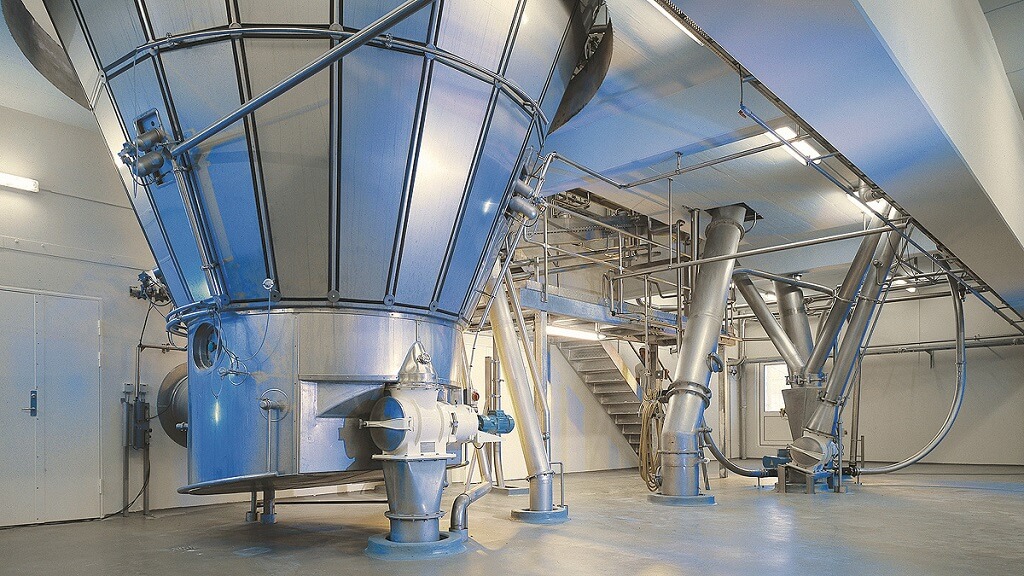
A centrifugal spray dryer uses a high-speed rotary atomizer to distribute the feed into droplets. This method can be considered where a broad operating range, continuous feed handling or a particular particle profile is required. Atomizer selection, rotation speed and feed condition all influence droplet formation and the powder produced.
Rotary atomization should be assessed together with feed viscosity, solids content, abrasive behavior, cleaning requirements and the intended production capacity. The chamber, air distributor and powder-recovery system must be designed as part of the complete process.
Pressure-Nozzle Atomization
A pressure spray dryer uses pump pressure and one or more nozzles to create droplets. It can be evaluated when the material and required operating range are suitable for pressure atomization. Nozzle design, operating pressure, pump configuration and filtration are important because they affect spray pattern, droplet size and reliability.
For products where particle properties are critical, trials can help determine how nozzle selection and process conditions influence powder density, moisture, flowability and reconstitution behavior.
Key Comparison Factors
- Feed properties: solids content, viscosity, particle content and sensitivity to shear affect atomizer suitability.
- Powder target: define the required moisture, particle-size range, bulk density, flowability and reconstitution behavior.
- Capacity and operating range: match the atomization system to normal and expected turndown conditions.
- Maintenance and cleaning: assess access, wear parts, nozzle or atomizer servicing, and cleaning validation.
- Utilities and layout: review pumping, compressed air where applicable, exhaust treatment and available building height.
How to Select an Atomization Method
Start with representative feed samples and a clear powder specification. Pilot trials or process testing can then be used to compare droplet formation, drying behavior, product quality and recovery. Griffin Machinery can review these inputs and help define a suitable centrifugal or pressure spray-drying configuration for the project.
ATOMIZATION REVIEW
Define the Feed and Powder Target Before Choosing Atomization
Centrifugal and pressure-nozzle atomization can both support industrial spray drying, but they create droplets through different mechanisms. Selection should connect representative feed behavior, powder targets, capacity and maintenance priorities to the complete dryer system.
Feed behavior and preparation
- Composition, solids concentration, viscosity, density and temperature
- Suspended particles, filtration needs, abrasiveness and corrosion
- Feed stability, pumpability and variation across production batches
Powder and production requirements
- Required capacity, operating range and production schedule
- Target moisture, particle behavior, bulk density and acceptable yield
- Fines, recovery, reconstitution and downstream handling requirements
Equipment and maintenance priorities
- Atomizer drive or high-pressure pump/nozzle system requirements
- Inspection, cleaning, wear parts, product changes and maintenance access
- Utilities, controls, installation space and spare-part strategy
Selection boundary: This comparison is general guidance, not confirmation that one atomization method will achieve a specified powder or capacity. Final selection requires representative feed data, process calculations, equipment-specific review and applicable safety requirements; testing may be needed.
Compare Spray Dryer Equipment
- Centrifugal Spray Dryer
- Pressure Spray Dryer
- Complete Guide to Spray Dryers
- Spray Dryer Design Principles
Review an Atomization Method for Your Feed
Send the feed composition and properties, capacity, target powder, product-contact requirements, utilities and maintenance priorities.
Centrifugal and Pressure Spray Dryer FAQs
Does feed viscosity determine the atomization method by itself?
No. Viscosity must be reviewed with solids, suspended particles, pumpability, powder target, capacity and the complete feed-preparation system.
Which method provides the best particle size?
There is no universal best result. Droplet and powder behavior depend on the feed, atomizer configuration, dryer conditions and collection system.
How do maintenance requirements differ?
Centrifugal systems involve the atomizer drive and rotating parts, while pressure systems involve the pump, nozzle and wear components. Actual maintenance depends on the material and operating duty.
What information should be included in an inquiry?
Provide feed properties, suspended-solids data, capacity, desired powder, contact materials, cleaning requirements, utilities and site conditions.