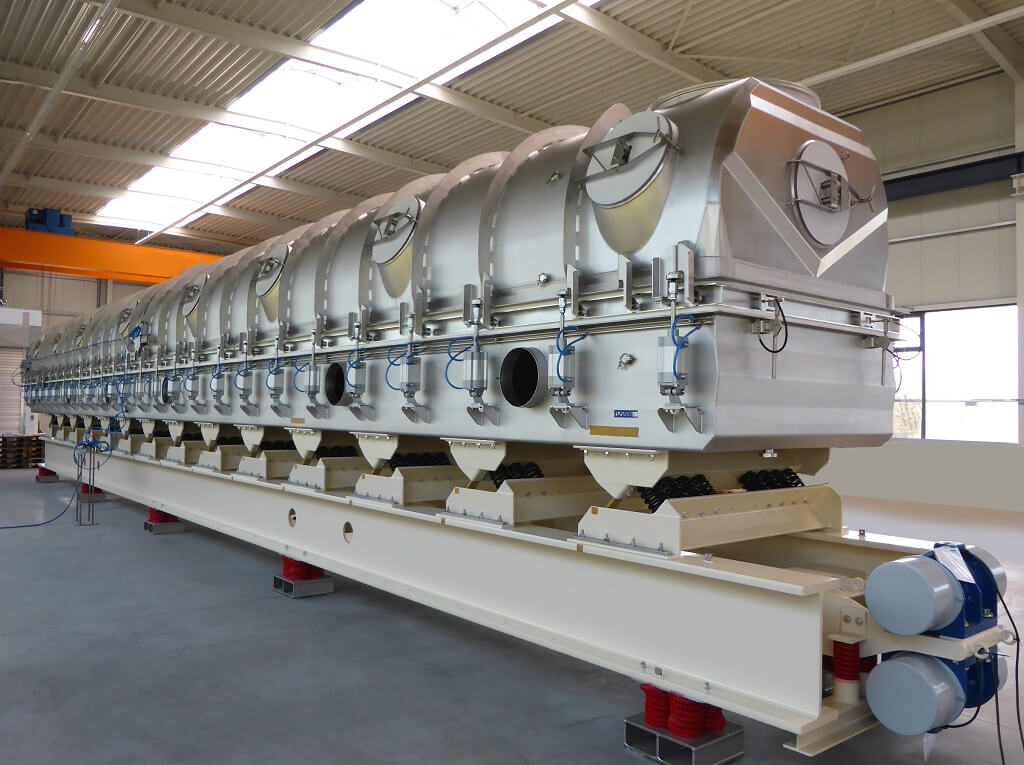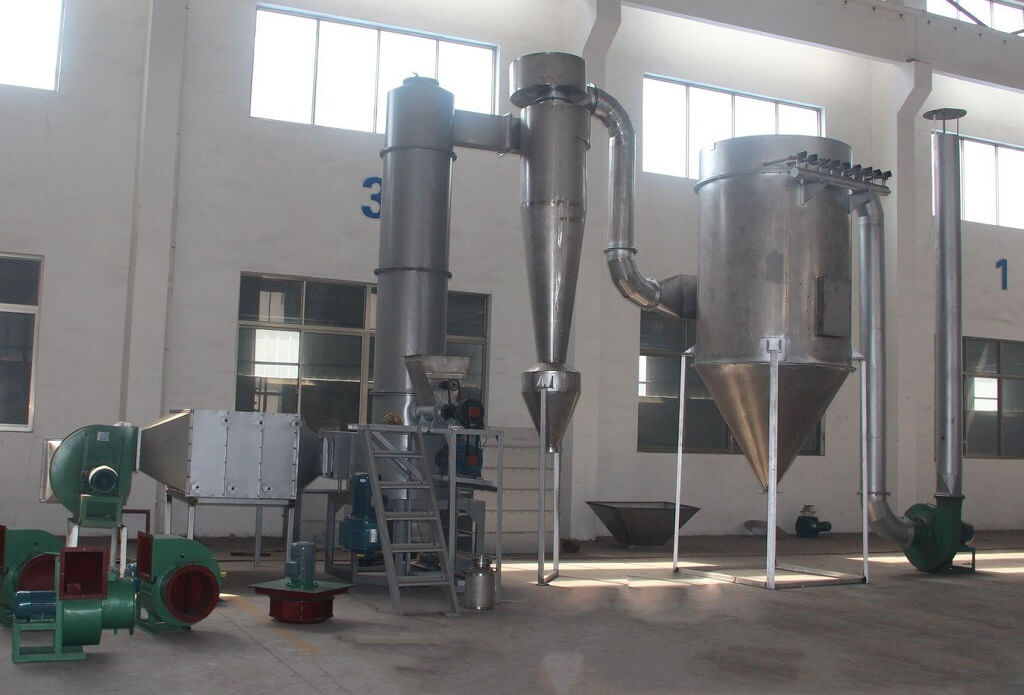
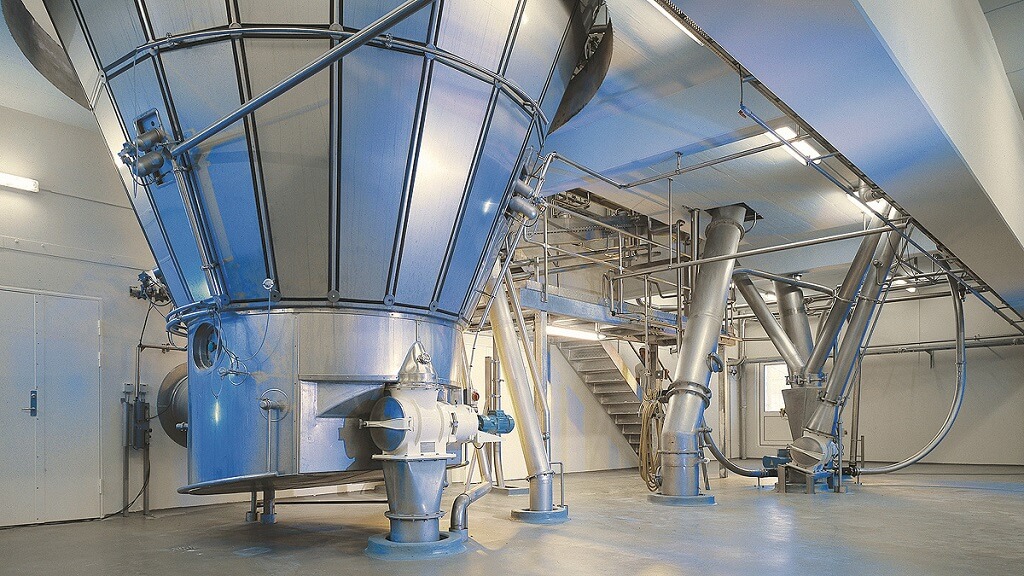
A spray-drying system converts a liquid or pumpable feed into a dry powder by atomizing the feed into a controlled stream of drying gas. Although the principle is straightforward, product quality depends on how the feed, atomization, air handling, drying chamber and powder-recovery equipment are designed to work together.
Feed Preparation and Delivery
The feed system normally includes a holding tank, filtration where required, pump, valves and piping. Its purpose is to provide a stable, consistent feed to the atomizer. Feed solids, viscosity, temperature and flow rate should be controlled because changes in these properties can affect droplet formation and the final powder.
Material-contact components should be selected for the product, cleaning method and applicable hygiene or corrosion-resistance requirements. The feed pump and controls must also be matched to the required flow range and pressure.
Atomization System
Atomization creates droplets with a large surface area so that moisture can evaporate efficiently. Depending on the application, a spray dryer may use a rotary atomizer, pressure nozzle or two-fluid nozzle. The choice affects droplet size, particle distribution, operating range and the way the feed is introduced into the drying chamber.
Atomizer selection should be based on feed properties, desired particle characteristics, capacity and maintenance requirements rather than on a single standard configuration.
Drying Air and Heating System
The air-handling system supplies filtered drying air at controlled temperature and volume. It can include air filters, a fan, heater, ducting, dampers and instrumentation. Air temperature and flow rate influence evaporation, powder moisture and thermal exposure. The appropriate heat source and controls depend on the project utilities, product requirements and safety review.
Drying Chamber and Air Distribution
The drying chamber provides the volume and gas-flow pattern needed for droplets to dry before powder collection. Air distribution and chamber geometry should promote stable drying while limiting wall deposition and allowing practical inspection and cleaning. The required residence time depends on the feed, atomization method and target powder properties.
Powder Separation and Exhaust Treatment
After drying, powder is commonly recovered using cyclones, bag filters or other separation equipment. The downstream arrangement may also include fines return, cooling, conveying, screening and packaging. Exhaust treatment and dust collection should be designed together with the process to support product recovery, housekeeping and local regulatory requirements.
Engineering a Spray-Drying System
Effective spray-dryer design begins with representative material data and clear product targets: capacity, feed solids, final moisture, particle profile, bulk density, cleaning needs and downstream handling. Griffin Machinery can review these inputs to help define a suitable spray-drying configuration and process-development plan.
SYSTEM DEFINITION REVIEW
Define the Complete Spray Dryer System from Feed to Powder Collection
A spray dryer is a connected process system. Atomization, air handling, chamber design and powder collection should be reviewed together with the feed and finished-powder requirements, rather than selected as isolated components.
Feed and atomization inputs
- Feed form, viscosity, solids, stability and pumpability
- Required particle characteristics and the compatible atomization approach
- Heat sensitivity, stickiness and the possible need for formulation review
- Feed preparation, storage, cleaning and material-contact requirements
Drying and air-handling duty
- Moisture-removal duty, capacity, operating schedule and temperature limits
- Heating source, airflow, air distribution and chamber operating conditions
- Exhaust treatment, filtration and emission-control requirements
- Utilities, installation space and maintenance access
Powder recovery and downstream handling
Review cyclone or filter collection, fines, deposits, powder discharge, conveying, storage and packaging requirements. These details influence the system layout as well as the finished product handling route.
Engineering boundary: Component descriptions on this page are general information, not a universal system specification or performance guarantee. Final design depends on the actual feed, powder target, utilities, safety inputs and site conditions; trials or an engineering review may be required.
Related Spray Drying Equipment
Discuss Your Spray Dryer System Requirement
Send the feed description, solids and viscosity, capacity, moisture target, powder requirements, temperature limits, utility information and site layout for an engineering review.
Spray Dryer System FAQs
Which components are required in a spray dryer system?
A system commonly includes feed preparation and delivery, atomization, air heating and handling, a drying chamber, powder collection, exhaust treatment and downstream powder handling. The exact scope depends on the project.
How is the atomization method selected?
Selection depends on feed behavior, viscosity, solids, desired powder characteristics, capacity and process requirements. The feed should be assessed before choosing an atomization route.
Why is powder collection part of system design?
Collection affects product recovery, fines handling, exhaust treatment, powder discharge and downstream conveying, so it should be defined together with the chamber and air system.
What data is useful for a system inquiry?
Provide feed description, solids, viscosity, capacity, initial and target moisture, powder target, temperature limits, solvent or dust information, utilities and site constraints.
How to Specify a Spray Dryer System
A spray dryer is an integrated process system rather than a single chamber. Feed delivery, atomization, air heating, drying, powder recovery, exhaust, controls, cleaning and downstream handling must be evaluated together against the material and site brief.
Define feed, atomization and powder targets
Provide feed composition, rheology, solids, flow rate, temperature, thermal sensitivity and hazard information. State target moisture, particle size, bulk density, morphology, solubility, flowability and any downstream packaging or blending requirement.
Coordinate air, chamber and recovery equipment
Review air volume, heating method, inlet and outlet conditions, chamber geometry, residence time, cyclone or filter recovery, fines return, exhaust routing and cooling. Identify utilities, pressure losses, access, cleaning, materials of construction and maintenance interfaces.
Document controls, safety and project responsibility
Define sensors, alarms, interlocks, dust containment, temperature protection, guarding, emissions controls, automation interfaces, factory testing, installation, commissioning and training. A scope matrix should show which party owns each design and approval item.
Engineering boundary: a component overview does not guarantee capacity, powder properties, recovery, energy use or safe operation for a specific feed. Final design requires representative data, calculations or trials, approved operating conditions and project-specific quality, environmental and safety review.
Prepare a Spray Dryer System Inquiry
Send feed data, production duty, powder targets, utilities, emissions constraints, cleaning requirements, floor space, automation interfaces and acceptance method. Review spray dryer systems, design principles, process flow guidance and contact requirements.
Discuss Your Spray Dryer System
Spray Dryer System FAQs
Which component should be selected first?
Start with feed behavior and product targets, then evaluate atomization, air handling, chamber, recovery and controls as an integrated system.
Why are powder targets important?
Moisture, particle size, density, morphology and flowability affect atomizer choice, residence time, recovery and downstream handling.
What belongs in a system scope matrix?
List equipment, utilities, controls, safety devices, documentation, testing, installation, commissioning, training and approval responsibilities.
When is testing useful?
Representative testing is useful when feed behavior, powder quality, recovery or scale-up assumptions are uncertain.