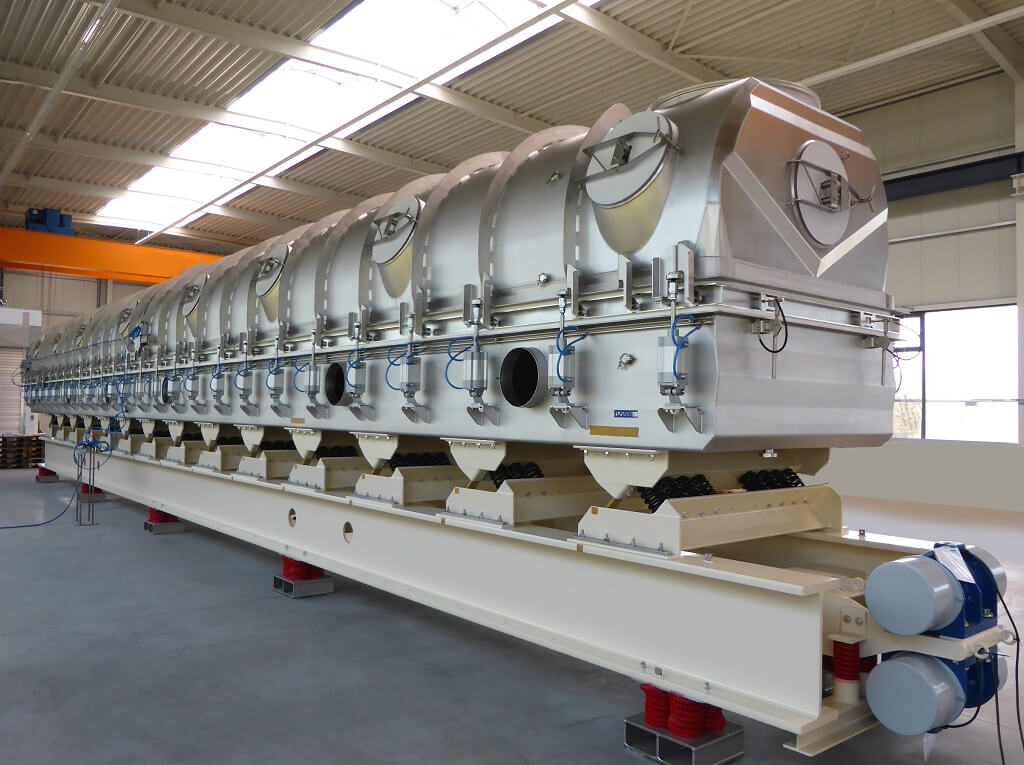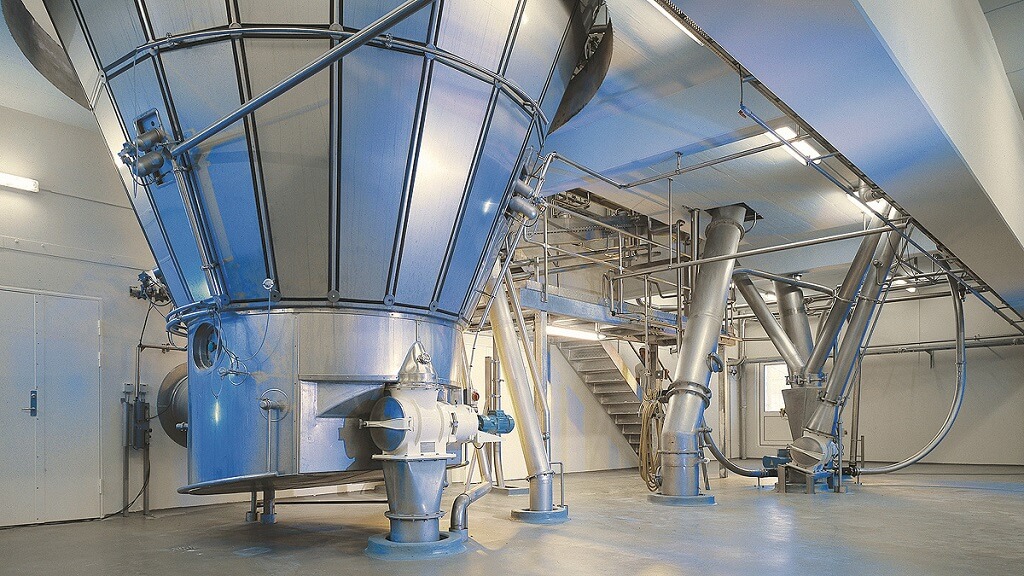
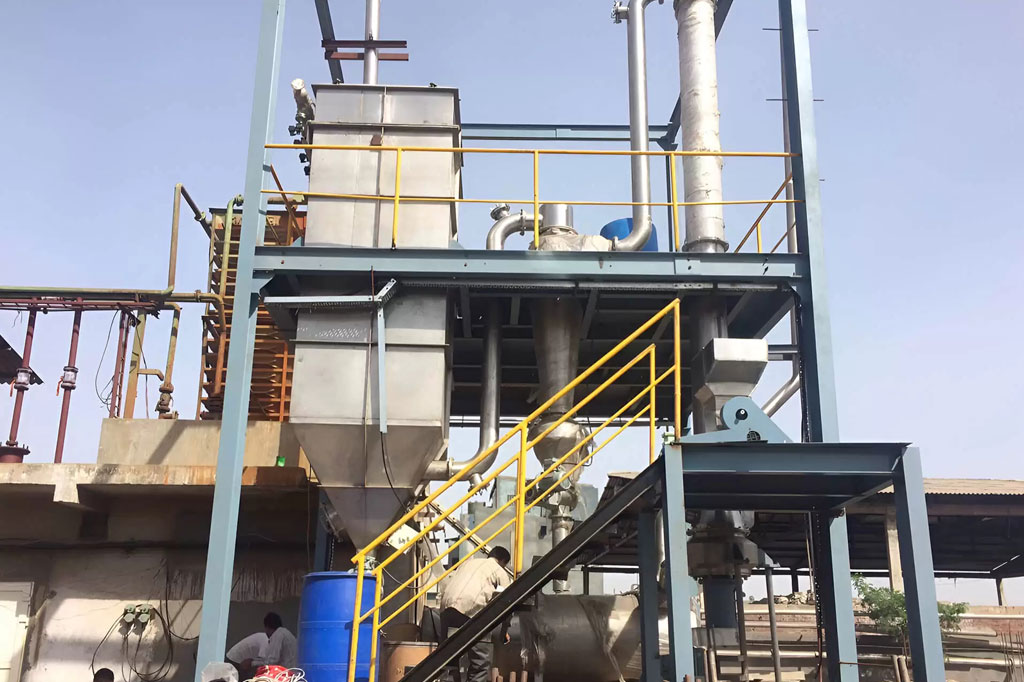
Spin flash dryers are widely used industrial drying systems designed to process wet materials such as pastes, slurries, filter cakes, and high-moisture powders.
The equipment combines mechanical agitation and hot airflow to rapidly remove moisture while simultaneously breaking down agglomerates. This makes spin flash drying particularly suitable for sticky or cohesive materials that are difficult to dry with conventional drying methods.
Due to their high efficiency, brief residence time, and ability to preserve product quality, spin flash dryers find applications across industries such as chemicals, pharmaceuticals, and food processing.
This article explores the three most common applications of spin flash dryers, including their role, typical materials processed, and the advantages they provide in industrial production.
1. Chemical Industry
The chemical industry is one of the largest users of spin flash dryers. Many chemical products are produced as wet filter cakes, pastes, or slurries after reactions, crystallization, or filtration processes. These materials must be dried to achieve stable storage, transport, and further processing.
Spin flash dryers are highly suitable for chemical processing because they can quickly evaporate moisture while maintaining consistent particle size and product quality. The combination of mechanical agitation and hot air helps disperse sticky materials and ensures uniform drying throughout the product.
Typical Chemical Products Processed
Spin flash dryers are commonly used to dry various chemical materials, such as:
- Pigments and dyes
- Catalysts
- Polymer resins
- Inorganic salts
- Titanium dioxide
- Calcium carbonate
- Agrochemical intermediates
In many chemical manufacturing processes, materials leaving filtration or centrifugation contain significant moisture. If not properly dried, these materials may form lumps, degrade, or become difficult to handle during packaging and transportation.
Advantages in Chemical Processing
- Rapid Drying Performance:By combining high-velocity hot air with mechanical dispersion, spin flash dryers enable rapid moisture removal while minimizing residence time.
- Uniform Particle Size: The integrated grinding and dispersion action breaks up lumps and produces consistent particle sizes.
- Suitable for Sticky Materials: Many chemical products are sticky or cohesive during drying. The rotating agitator prevents wall sticking and ensures smooth processing.
- Continuous Operation: Chemical plants often operate continuously, and spin flash dryers support uninterrupted production with high throughput.
Because of these advantages, spin flash dryers are widely used for drying specialty chemicals, pigments, catalysts, and polymer powders in modern chemical manufacturing facilities.
2. Pharmaceutical Industry
The pharmaceutical industry also relies heavily on spin flash drying technology. Pharmaceutical products demand stringent quality control, including precise moisture content, consistent particle size distribution, and chemical stability.
Spin flash dryers provide a controlled drying environment that helps preserve the integrity of sensitive pharmaceutical compounds. This is particularly important when processing active pharmaceutical ingredients (APIs) and excipients.
Typical Pharmaceutical Materials
Spin flash dryers are commonly used to process:
- Active pharmaceutical ingredients (APIs)
- Pharmaceutical intermediates
- Antibiotics
- Vitamins
- Herbal extracts
- Excipients used in tablet formulation
These materials often require gentle drying to avoid degradation or loss of activity.
Advantages in Pharmaceutical Production
- Protection of Heat-Sensitive Compounds: Spin flash dryers operate with very short residence times, which reduces thermal exposure and helps maintain the stability of pharmaceutical compounds.
- Precise Moisture Control: Moisture content can be accurately controlled by adjusting air temperature, airflow, and feed rate.
- Consistent Powder Characteristics: Uniform particle size and flowability are essential for tablet compression and capsule filling.
- Hygienic and Controlled Processing: Modern spin flash dryers can be designed with closed systems and sanitary materials to meet pharmaceutical manufacturing standards.
Because of these advantages, spin flash drying is widely used in pharmaceutical plants to convert wet intermediates into free-flowing powders suitable for downstream processing, such as blending, granulation, or tablet production.
3. Food Processing Industry
The food processing industry represents another major application area for spin flash dryers. Many food ingredients are produced from liquid extracts, slurries, or wet solids that must be converted into stable powders.
Spin flash dryers are particularly valuable in this sector because they can dry heat-sensitive ingredients while preserving nutritional value, color, and flavor.
Typical Food Products
Common food materials processed using spin flash dryers include:
- Starches and modified starch
- Soy protein and plant proteins
- Wheat gluten
- Milk derivatives and whey proteins
- Flavoring agents and food additives
- Fruit and vegetable powders
The technology is also used in the production of instant food ingredients and functional powders used in beverages and processed foods. (Spin Flash Drying)
Advantages in Food Production
- Preservation of Nutritional Quality: The short drying time reduces thermal degradation of vitamins, proteins, and other nutrients.
- Retention of Flavor and Color: Rapid moisture removal helps maintain natural flavors and vibrant colors in food powders.
- Improved Powder Flowability: Spin flash dryers produce fine, free-flowing powders that are easy to mix and package.
- Efficient Processing of Wet Materials: Food processing often produces slurries and pastes. The strong dispersing action of the dryer effectively handles these materials.
In addition, the technology supports the growing demand for instant food powders, protein ingredients, and functional food additives, making spin flash drying increasingly important in modern food manufacturing.
Conclusion
Spin flash dryers have become an essential drying technology in many industrial sectors due to their ability to process sticky, high-moisture materials efficiently.
- In the chemical industry, spin flash dryers are employed to dry pigments, catalysts, polymers, and various specialty chemicals.
- In the pharmaceutical industry, they enable precise drying of APIs, excipients, and intermediates while preserving chemical stability.
- In the food industry, they are widely used to produce starches, proteins, and functional food powders with preserved flavor and nutrition.
APPLICATION REVIEW
Evaluate the Material, Not Only the Industry
Industry classification does not establish spin flash dryer suitability. Materials within the same industry can behave differently during feeding, disintegration, heat exposure, drying and powder separation.
Wet feed behavior
- Paste, filter cake or slurry form; initial and target moisture
- Consistency, stickiness, agglomeration and ease of controlled feeding
- Foreign matter, abrasiveness, corrosion and contact-material requirements
Drying and powder targets
- Required capacity, operating schedule and allowable temperature exposure
- Final moisture, particle behavior, bulk density and acceptable product yield
- Fines, dust collection, discharge, cooling and downstream handling
Safety and site requirements
- Combustible dust, volatile components, containment or sanitation needs
- Available heat source, electrical standard, exhaust treatment and installation space
- Cleaning, access, control and upstream/downstream equipment interfaces
Application boundary: The examples on this page show possible application areas, not confirmation that every listed material is suitable. Final configuration and performance depend on representative feed data, the required product, project utilities and safety requirements; testing may be needed for uncertain material behavior.
Related Spin Flash Dryer Resources
- Spin Flash Dryer
- Suitable Materials for Spin Flash Drying
- Spin Flash Dryer Working Principle
- Spin Flash Dryer Operating Procedures
Review a Spin Flash Drying Application
Send the wet material description, feed form, moisture data, capacity, temperature limits, powder target and any dust, solvent or site constraints.
Spin Flash Dryer Application FAQs
Are all filter cakes suitable for spin flash drying?
No. Feed consistency, stickiness, disintegration behavior, heat sensitivity and powder recovery must be evaluated for the actual material.
Can a laboratory sample confirm industrial suitability?
A sample can support evaluation, but industrial capacity and product results also depend on representative feed variation, equipment configuration, utilities and scale-up conditions.
Why is the discharge powder target important?
Final moisture, particle behavior, yield, dust load and downstream handling influence the drying duty, separation system and complete process configuration.
What should be included in an application inquiry?
Provide material identity, wet feed form, initial and target moisture, capacity, temperature limit, powder target, operating schedule and safety or installation constraints.