
Batch Fluidized Bed Dryer
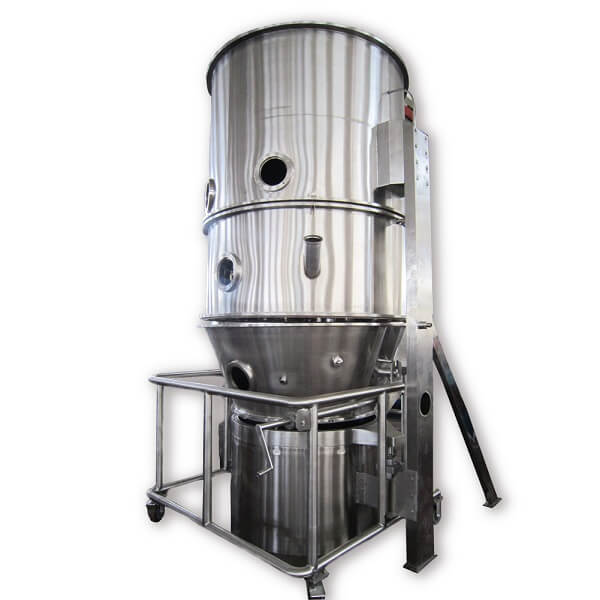
A batch fluidized bed dryer consists of a large, cylindrical vessel that is partially filled with the material to be dried. When a batch of wet material is loaded into the fluidized bed and the gas is heated to the desired temperature. The wet material is then exposed to the hot gas and the fluidized bed acts as a heat exchanger, transferring heat to the wet material and evaporating the moisture.
Batch fluid bed dryers are commonly used in the pharmaceutical, chemical, and food industries for drying powders, granules, and other solid materials. However, it is important to consider the pros and cons before deciding.
Pros
- High heat transfer rates
- Efficient uniform drying
- Versatility
- Low maintenance
Cons
- Limited capacity
- High initial cost
- Sensitive to material
- Dust control
Tray Dryer Oven
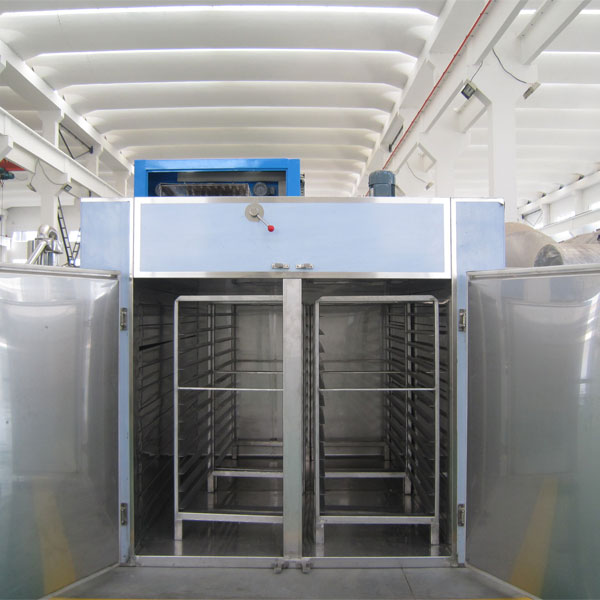
Our tray dryer ovens come in different sizes and configurations, ranging from small laboratory models to large-scale industrial units. They consist of a large insulated chamber with multiple trays or shelves that can be loaded with the material to be dried.
This tray dryer is heated using either electricity or gas, and the temperature can be controlled using a thermostat. The hot air is circulated using a fan, and the speed of the fan can be adjusted to control the rate of drying.
Pros
- Temperature control
- Large batches
- Easy to use
- Versatility
Cons
- Space requirements
- Uneven drying
- Time-consuming
- Labor-intensive
Vacuum Dryers
A vacuum dryer is a type of batch dryer that operates under vacuum conditions to evaporate moisture or solvents from drying materials. The vacuum reduces the boiling point of liquids, allowing them to be removed from the product at a lower temperature, thus minimizing damage to heat-sensitive materials.
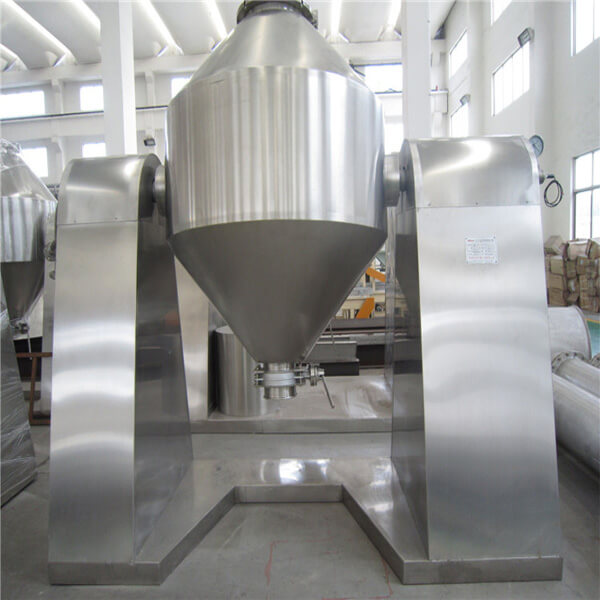
A double cone vacuum dryer (DCVD) is a type of batch dryer used to dry heat-sensitive materials at low temperatures under vacuum conditions.
The dryer comprises a rotating double cone-shaped vessel that is partially filled with the material to be dried. The vacuum system removes the water or solvent vapor from the material and collects it in a condenser.
This dryer is commonly used in the chemical, pharmaceutical, and food industries.
Pros
- Gentle drying
- Energy-efficient
- Space-saving
Cons
- Limited capacity
- Material limitations
- Noise
A vacuum freeze dryer, also known as a lyophilizer, which consists of a refrigeration system, a vacuum chamber, and a heating system. The process of freeze-drying involves freezing the material at low temperatures and then reducing the pressure in a vacuum chamber to sublimate the frozen water.
It is commonly used in the pharmaceutical and biotechnology industries to preserve biological products without damaging their structures and functions. It is also used in the food industry, such as fruits, vegetables, and meat.
Pros
- Safe for sensitive materials
- Retains nutrients
- Longer shelf life
Cons
- Limited capacity
- Expensive
- Complexity
- Time consuming
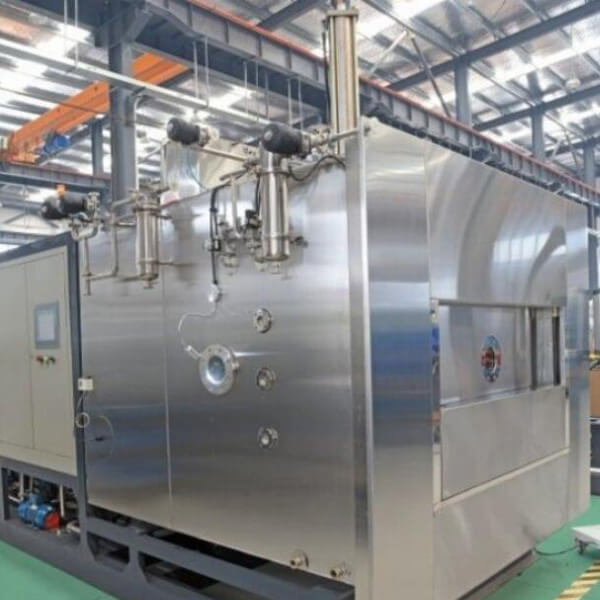
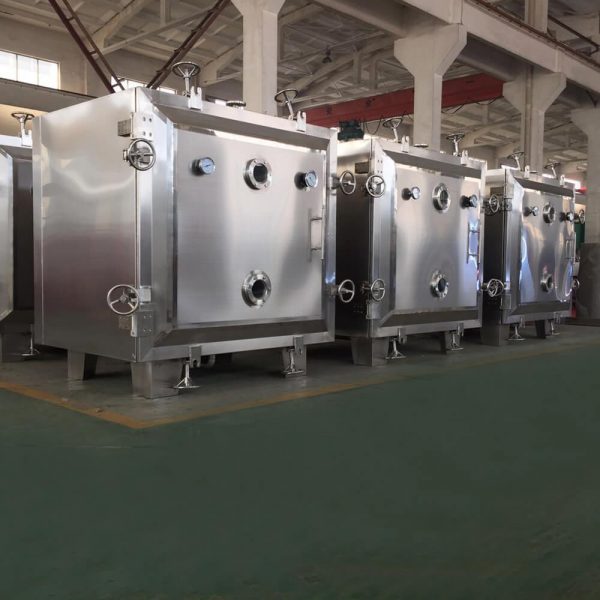
A vacuum drying oven is similar to a conventional oven but operates at reduced pressure, which lowers the boiling point of water or solvents. It consists of a chamber that can be sealed and connected to a vacuum pump, a heating element, and a temperature controller.
It is commonly used in chemistry, biology, and materials science industries, and also commonly used in the drying of heat-sensitive materials, removal of residual solvents, and drying of powders, crystals, and other solids.
Pros
- Temperature control
- Energy efficiency
- Reduced oxidation
- Versatile
Cons
- Limited capacity
- Risk of implosion
- Maintenance requirements
Contact Us
Get in touch with us now. Our team is ready to help you find the right solution for your drying project.
Choose a Batch Dryer for Your Production Duty
Batch drying is useful when campaigns, recipes, cleaning, traceability or product changeovers require controlled lots. Equipment selection should connect feed behavior, heat and mass transfer, loading, discharge, cleaning, controls and site interfaces.
Define batch size and material condition
Provide material form, loading method, batch mass, initial and target moisture, bulk density, particle or piece size, temperature limits, drying-time objective and any tendency to cake, degrade, oxidize or release dust.
Compare fluid bed, tray and vacuum routes
Evaluate whether fluidization, static tray loading or reduced-pressure drying best matches product sensitivity, mixing or uniformity needs, cleaning, solvent or exhaust conditions, utilities and operator handling.
Specify validation and changeover requirements
Document sampling, moisture and temperature methods, recipe control, alarms, interlocks, cleaning or validation, materials of construction, factory testing, installation, commissioning and training responsibilities.
Engineering boundary: product descriptions do not guarantee batch time, capacity, uniformity, final moisture, energy use or product quality. Final selection requires representative data, calculations or trials, approved conditions and project-specific acceptance criteria.
Request a Batch Dryer Application Review
Review fluid bed systems, all drying equipment, continuous dryer alternatives and project references.
Batch Dryer Selection FAQs
When is batch drying appropriate?
It may suit campaign production, frequent recipe changes, controlled lots, smaller throughput or processes with defined cleaning and traceability needs.
What determines batch drying time?
Material properties, loading depth, moisture duty, heat and airflow, pressure, mixing, equipment configuration and the acceptance method all contribute.
How should proposals be compared?
Use one process brief and compare assumptions, batch definition, utilities, controls, cleaning, tests, exclusions and responsibilities.
SELECTION GUIDANCE
Industrial Batch Dryer FAQs
What is the difference between a batch dryer and a continuous dryer?
A batch dryer processes a defined load through a complete drying cycle before discharge. A continuous dryer receives and discharges material during operation. The choice depends on production schedule, batch traceability, changeover, cleaning and throughput requirements.
How do I choose between a batch fluid bed dryer, tray dryer and vacuum dryer?
A batch fluid bed dryer is evaluated for particles that can be fluidized, a tray dryer for materials loaded on trays, and a vacuum dryer when reduced-pressure processing is required. Material behavior and process requirements determine the final choice.
Can batch dryers be used for heat-sensitive materials?
Some batch dryer configurations can support controlled or reduced-temperature processing, but suitability depends on the material temperature limit, moisture or solvent to remove, cycle time and required final quality.
What information is needed to select an industrial batch dryer?
Provide the material name and feed form, batch size, initial and target moisture, temperature limit, required cycle time, solvent information, heat source, cleaning needs and installation country.