
Vibrating Fluidized Bed Dryer
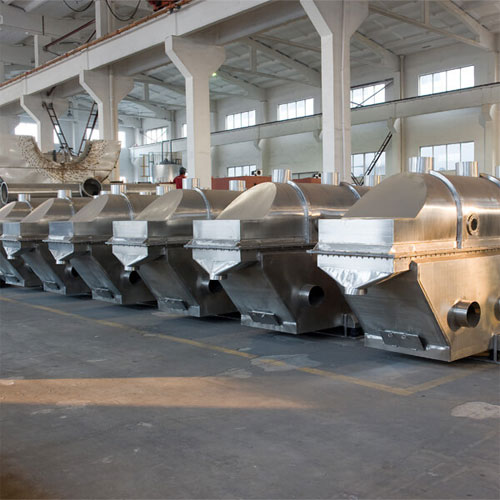
In this type of continuous dryer, a bed of solid particles is fluidized by air and the particles are kept in a state of constant agitation by a vibrating motion which enhanced the fluidization of the particles, promoting better heat and mass transfer, resulting in faster drying.
It is suitable for large-scale production processes that require consistent and efficient drying of bulk materials.
Spin Flash Dryer
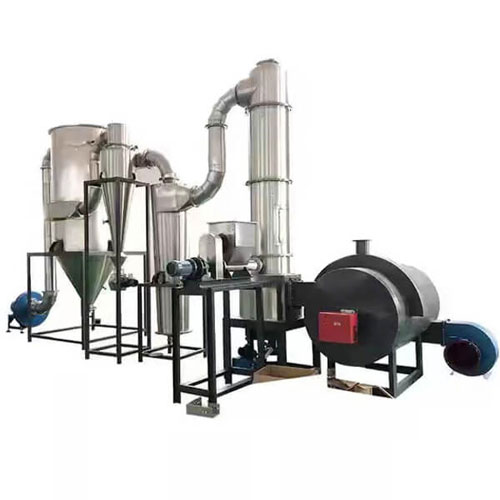
In a spin flash dryer, the rotor generates centrifugal force that flings the material against the walls of the chamber, creating a thin film that is exposed to the hot air flowing through the dryer. The hot air evaporates the moisture from the material, and the dry product is collected at the bottom of the chamber.
It is commonly used in the food, chemical, and pharmaceutical industries for applications such as drying starch, gelatin, and other hydrocolloids.
Spray Dryers
We provide centrifugal spray dryers, closed loop spray dryers and pressure spray dryers, they are all continuous type dryers that are commonly used in industrial settings for drying liquids into powders or granules.
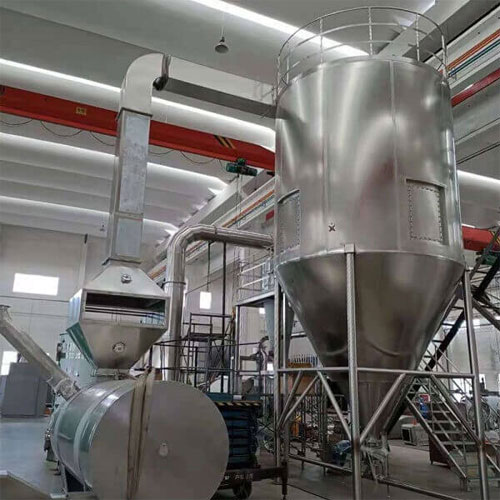
Our centrifugal spray dryer adopts a high-speed centrifugal disc atomization method. By atomizing the material into mist droplets, then contact with the hot air distributed in the tower body to form a uniform powdery dry product.
Because the surface area of the atomized material is greatly increased, the drying speed is faster, and the dried product has good quality, high uniformity, and good solubility.
The dried product does not need to be crushed and classified, which reduces the production process. Therefore, it is widely used in drying materials in food, chemical, agricultural, and pharmaceutical industries, especially for drying heat-sensitive materials.
Our explosion-proof closed-loop spray dryer system works in a closed environment, using nitrogen as the circulating gas, and there is no leakage under the pressure of 0.3 MPa.
Its structure is mainly composed of spray dryer, nitrogen closed-circuit circulation system, steam heater, gas-solid separator, nitrogen backflush dust collector, and condensing cooling solvent recovery system.
It is suitable for drying materials with organic solvents, materials with toxic gases, or materials that are prone to oxidation during the drying process.
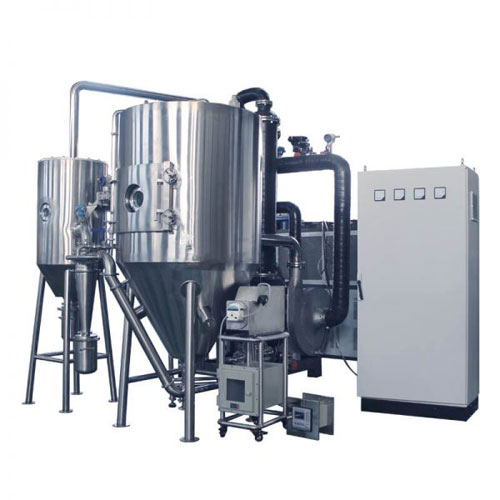
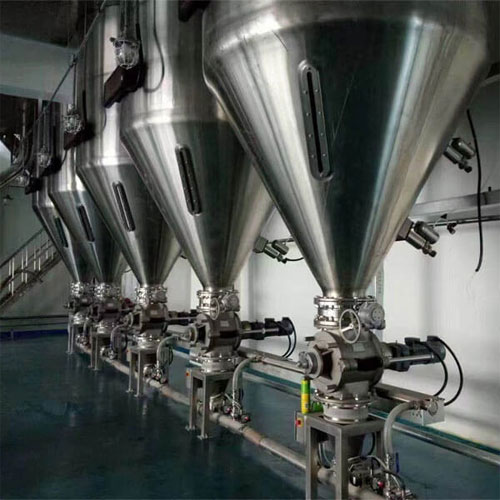
Our pressure spray dryer is a drying equipment integrating drying and granulation. It is easy to operate and control.
Its working process is to feed the liquid material into the pressure atomizer through a high pressure of 2-20MPa and atomize it into small droplets. The surface area of the atomized droplets is greatly increased, and they can fully contact with the hot air. The drying process is quickly completed within 30 seconds.
The dried product is spherical particles with uniform particle size, high purity and strong adaptability to materials. Therefore, most materials in food, chemical, pharmaceutical, agricultural, ceramic and other industries can be dried by our pressure spray dryer.
Rotary Kiln Dryer
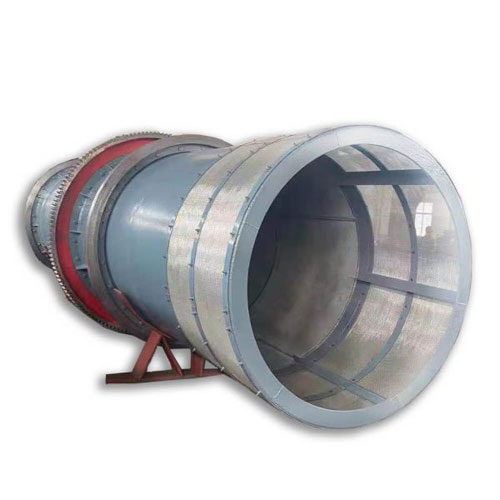
The rotary kiln is a cylindrical shell that is inclined slightly from the horizontal and rotates slowly about its axis. As the material is fed into the rotary kiln dryer at one end, it moves gradually towards the other end due to the kiln's rotation.
It is commonly used in the processing of bulk solids, such as minerals, chemicals, and agricultural products. It is also used in the production of cement, lime, and other building materials, as well as in the recycling of waste materials.
Mesh Belt Dryer
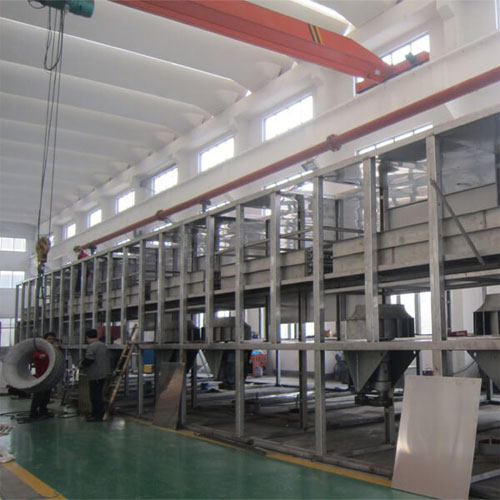
This type of dryer typically uses a stainless steel conveyor belt to continuously transport and dry materials. It can handle a large volume of materials, making it an efficient and cost-effective solution for industrial drying.
It is commonly used for drying food products, such as fruits and vegetables, as well as chemicals, plastics, and other industrial materials.
Vacuum Belt Dryer
The dryer's conveyor belt (made of a permeable material) moves continuously through a vacuum environment which allows for low-temperature drying, which can help preserve the quality.
It is particularly suitable for drying heat-sensitive materials that cannot be exposed to high temperatures or for drying materials that are easily oxidized or combustible.
Disc Dryer
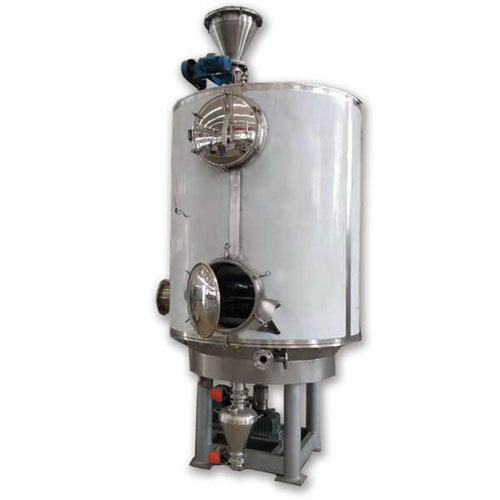
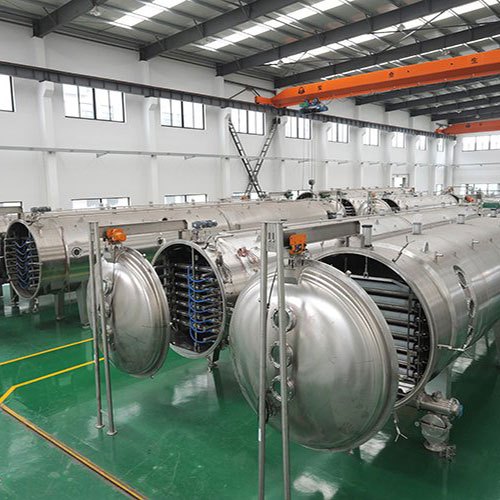
Our vertical disc dryer consists of a series of rotating discs that are arranged in a stack. When the material is fed onto the top disc, and as the discs rotate, the material moved down and is dried by the heated air inside the chamber. The dried material is finally discharged from the bottom of the dryer.
It is commonly used in chemical, food processing, pharmaceutical, and other industries to dry and process a wide range of materials, including powders, granules, crystals, and other solids.
Air Flow Dryer
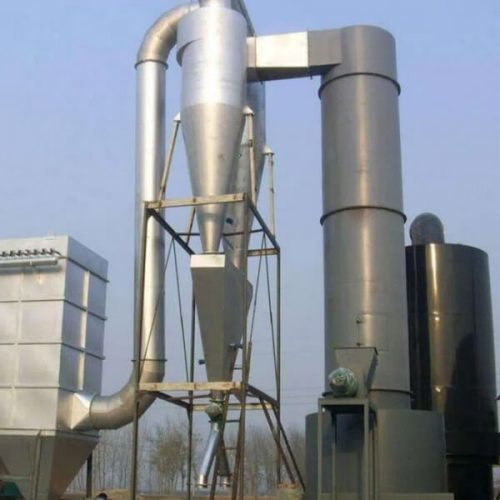
This is a type of continuous dryer to remove moisture by passing them through a heated airflow. It can be operated at different temperatures and airflow rates.
It is capable of handling high volumes of material and can produce uniformly dried products with minimal operator intervention. It is commonly used in industries such as agriculture, food processing, and mineral processing to dry products like grains, vegetables, fruits, and minerals.
Contact Us
Get in touch with us now. Our team is ready to help you find the right continuous dryer for your drying project.
Choose a Continuous Dryer for Your Production Line
Continuous drying should be evaluated from feed preparation through discharge and downstream handling. Stable metering, heat and mass transfer, residence-time control, powder or product recovery, automation and maintenance access must work together.
Define throughput and feed variability
Provide normal, minimum and maximum feed rates, operating schedule, material form, size distribution, bulk density, initial and target moisture, temperature limits, variability, startup and shutdown expectations and any recycle stream.
Compare spray, belt and fluid bed routes
Spray dryers suit pumpable feeds; belt dryers can handle distributed layers or pieces; fluid bed dryers suit fluidizable particles and granules. Final selection depends on material behavior, product targets, residence time, utilities, emissions and cleaning.
Plan line integration and availability
Define upstream metering, downstream cooling or conveying, buffer capacity, controls, alarms, interlocks, dust collection, cleaning, wear parts, planned maintenance, factory testing, commissioning and operator training.
Engineering boundary: product descriptions do not guarantee continuous capacity, availability, final moisture, energy use or product quality. Final configuration requires representative data, calculations or trials, approved operating conditions and project-specific acceptance criteria.
Request a Continuous Dryer Application Review
Review spray dryer systems, fluid bed systems, belt dryer options and batch dryer alternatives.
Send Continuous Dryer Requirements
Continuous Dryer Selection FAQs
What production data is required?
Provide feed-rate range, schedule, moisture duty, product targets, variability, utilities, cleaning, emissions and acceptance requirements.
How should turndown be evaluated?
Review the stable operating range for feed, heat, airflow, residence time, recovery and controls rather than assuming one nominal capacity covers every condition.
When is batch drying a better option?
Batch equipment may suit frequent recipe changes, smaller campaigns, traceability, validation or cleaning requirements that conflict with continuous operation.
PROCESS SELECTION
How to Select a Continuous Industrial Dryer
Continuous drying equipment should be selected from verified process requirements rather than equipment name alone. Compare the feed form, material movement, heat sensitivity, required output, moisture target, residence time, exhaust treatment, cleaning requirements and available utilities.
Feed Form
Identify whether the feed is a liquid, slurry, paste, wet cake, granule, powder or formed product.
Material Movement
Assess fluidization, pneumatic conveying, belt conveying, tumbling or indirect-contact processing.
Thermal Limits
Document inlet conditions, product temperature limits, oxidation concerns and any solvent or atmosphere requirements.
Production Target
Define feed rate, target moisture, operating schedule, cleaning method and upstream or downstream interfaces.
Request a Continuous Dryer Recommendation
Send your material data and production requirements so the engineering team can evaluate an appropriate drying route.
SELECTION GUIDANCE
Continuous Dryer FAQs
When is a continuous dryer preferable to a batch dryer?
A continuous dryer is evaluated when material must move through the drying process during operation and the production plan calls for sustained throughput. Batch traceability, product changeover, cleaning and upstream or downstream coordination should still be reviewed before selection.
How do I choose among belt, fluid bed, spray and flash drying?
Selection starts with feed form and material behavior. Belt systems convey material on a moving surface, fluid bed systems require suitable particle fluidization, spray dryers convert pumpable liquid feed into powder, and flash dryers carry suitable wet solids in a high-velocity gas stream. Testing may be required.
Can a continuous dryer handle heat-sensitive or solvent-containing materials?
Some continuous configurations can be evaluated for controlled-temperature or closed processing, but suitability depends on the material temperature limit, solvent properties, atmosphere, residence time, target moisture and safety requirements.
What process data is needed for a continuous dryer proposal?
Provide the material name and feed form, initial and target moisture, feed rate or required output, particle size, bulk density, temperature limit, solvent information, heat source, available utilities, cleaning needs and installation country.