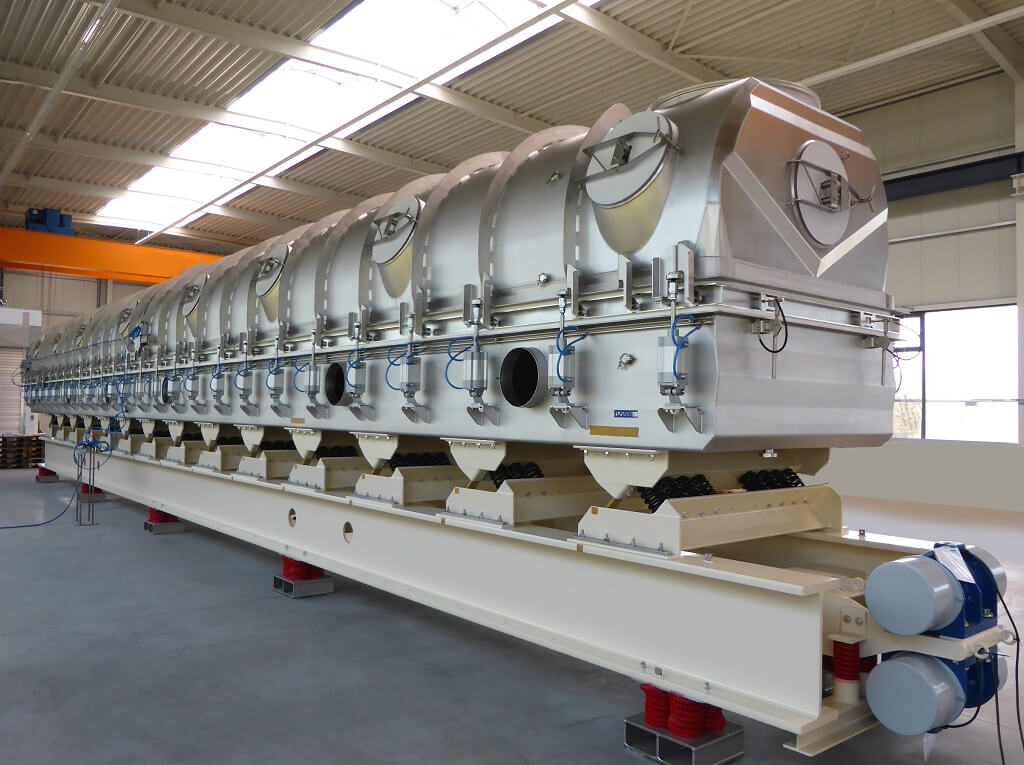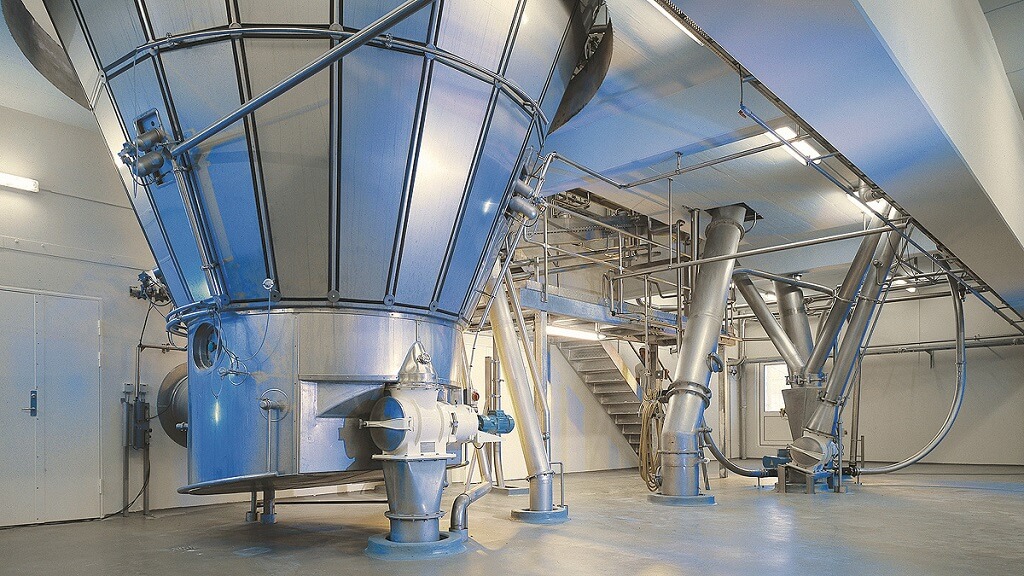
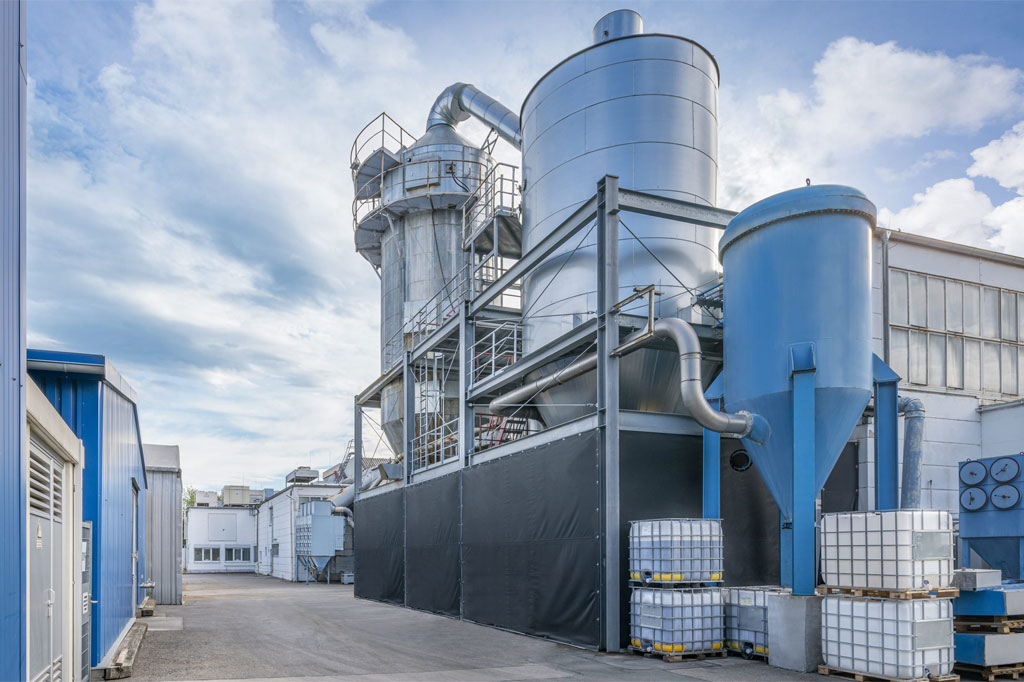
A spray dryer is used to convert liquid feed – such as solutions, suspensions, or emulsions – into dry powder by rapidly drying the material with hot gas. The process works by breaking the liquid into very fine droplets and exposing them to hot air, which causes the moisture to evaporate almost immediately.
Spray drying is unique because it combines atomization and drying in a single step. The liquid is transformed into powder within seconds, allowing manufacturers to produce uniform particles with controlled size, shape, and moisture content.
This technology is particularly useful for materials that must retain specific properties, such as flavor, nutritional value, or chemical stability. Because the droplets dry very quickly, heat-sensitive materials often experience minimal thermal damage.
Typical feed materials used in spray dryers include:
- Dairy products
- Food extracts and flavors
- Pharmaceuticals
- Chemical solutions
- Ceramic slurries
- Detergent solutions
Industrial spray dryers are often large vertical towers where atomized droplets fall through hot air streams while drying.
How Spray Dryers Work?
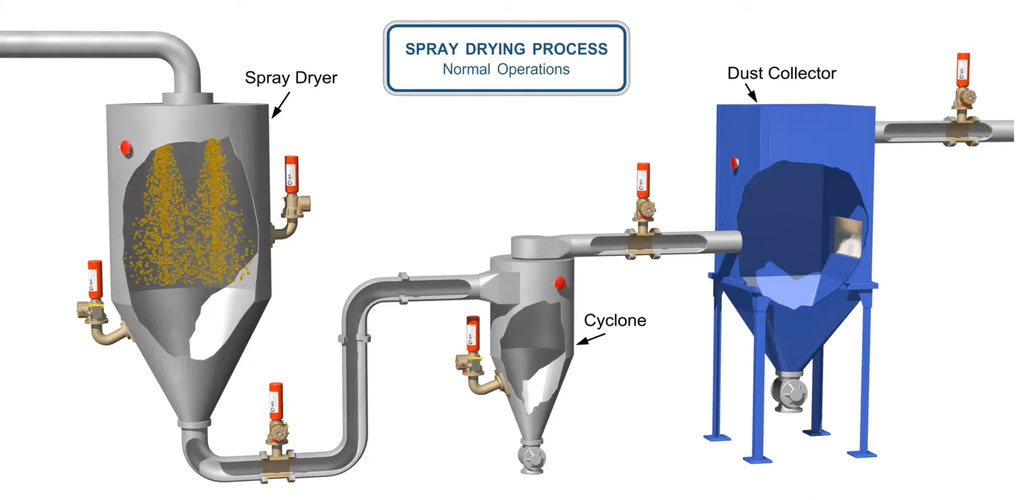
The spray drying process converts a liquid feed into powder through four main steps: atomization, contact with hot air, moisture evaporation, and powder collection.
1. Liquid Feed Preparation
The process begins with preparing the liquid feed. The material may be a solution, suspension, slurry, or emulsion. It is usually filtered or homogenized to ensure uniform composition before entering the drying system.
A feed pump then delivers the liquid into the atomization system at a controlled rate.
2. Atomization
Atomization is the most important stage in spray drying. During this step, the liquid feed is dispersed into fine droplets by an atomizer, greatly increasing the liquid’s surface area and enabling rapid moisture evaporation.
Common atomization methods include:
- Rotary atomizers
- Pressure nozzles
- Two-fluid nozzles
Atomization produces a fine mist of droplets that enter the drying chamber.
3. Contact With Hot Air
Hot air enters the drying chamber and interacts with the atomized droplets, whose large surface area enables rapid heat transfer.
As the droplets move through the chamber, the moisture inside them evaporates rapidly. This process often occurs in only a few seconds due to the high evaporation rate.
4. Moisture Evaporation
As water evaporates from the droplets, solid particles begin forming. The droplet gradually transforms into a dry particle.
Most spray dryers are designed so that droplets move in the same direction as the hot air stream (co-current flow), which reduces heat exposure and protects sensitive materials.
5. Powder Collection
The dried powder is separated from the exhaust air using collection systems such as cyclones, bag filters, or electrostatic collectors.
The resulting powder is collected and discharged from the bottom of the drying chamber or through a cyclone separator.
Since the operation runs continuously, spray dryers are well-suited for large-scale industrial manufacturing.
Main Components of a Spray Dryer
A spray dryer comprises several essential components that work together to achieve efficient drying and consistent powder production.
Feed System
The feed system delivers liquid material into the dryer at a controlled rate. It typically includes:
- Feed tanks
- Pumps
- Flow control valves
The feed rate directly influences particle size and final moisture content.
Atomizer
The atomizer converts the liquid feed into fine droplets. It is considered the core component of the spray dryer.
Common atomizers include:
- Rotary atomizers
- Pressure nozzles
- Two-fluid nozzles
Uniform droplet size ensures consistent powder quality.
Air Heating System
The air heating system provides the hot air. Heating sources may include:
- Electric heaters
- Steam heaters
- Gas burners
The system accurately regulates the inlet air temperature to maintain ideal drying conditions.
Drying Chamber
The drying chamber is the main processing area where droplets contact hot air and moisture evaporates.
Most drying chambers are large cylindrical vessels with conical bottoms to facilitate powder collection.
The chamber design affects:
- Residence time
- airflow pattern
- drying efficiency
Air Distribution System
The air distributor guarantees uniform hot air circulation throughout the chamber. Uniform airflow prevents uneven drying and wall deposits.
Powder Collection System
After drying, powder particles are separated from the air using:
- Cyclone separators
- Bag filters
- Electrostatic collectors
Cyclones are commonly used because they efficiently capture most powder particles.
Exhaust System
The exhaust system removes humid air from the chamber and helps prevent pressure buildup.
Control System
Modern spray dryers use automated control systems that monitor:
- Temperature
- Feed rate
- airflow
- pressure
Automated systems ensure consistent product quality and operational safety.
Types of Spray Dryers
Spray dryers can be classified based on the atomization method or system configuration. The three most common industrial types are centrifugal spray dryers, closed loop spray dryers, and pressure spray dryers.
Centrifugal Spray Dryer
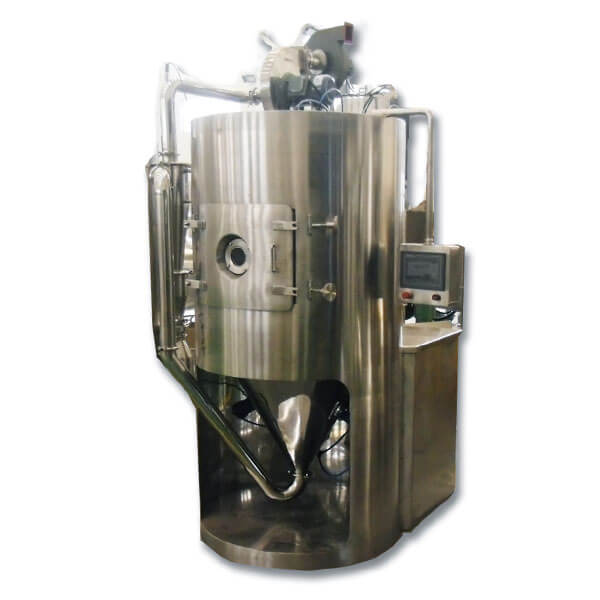
A centrifugal spray dryer uses a high-speed rotating disc to atomize the liquid feed.
The feed enters the center of the disc, which spins at extremely high speeds—often between 10,000 and 30,000 RPM. The centrifugal force throws the liquid outward, forming fine droplets.
Key features
- Handles high-viscosity liquids
- Produces uniform particle size
- High production capacity
- Suitable for continuous operation
Typical applications
- Dairy powder production
- Ceramic powders
- food additives
- chemicals
Because of its flexibility and efficiency, centrifugal spray drying is widely used in large industrial systems.
Closed Loop Spray Dryer
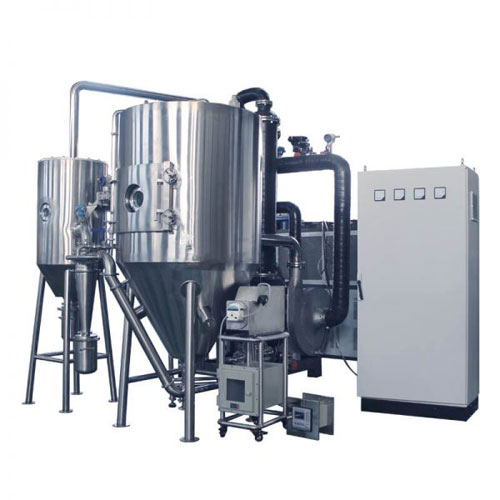
Closed-loop spray dryers are designed for processing materials containing organic solvents or oxygen-sensitive substances.
Instead of using air as the drying medium, these systems use inert gases such as nitrogen. The gas circulates in a closed loop system.
A condenser captures solvent vapors from the exhaust gas before the air is recirculated within the system.
Advantages
- Safe handling of flammable solvents
- Solvent recovery capability
- Reduced environmental emissions
- Suitable for pharmaceutical and chemical processes
Closed loop spray dryers are commonly used for products that require strict safety control.
Pressure Spray Dryer
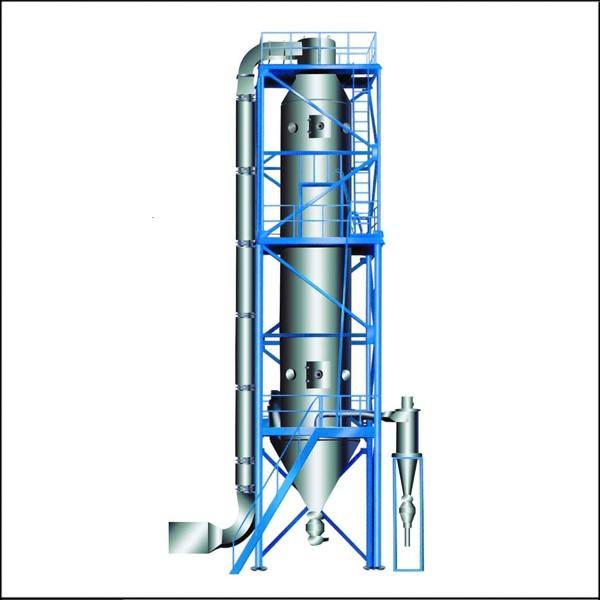
Pressure spray dryers operate by using high-pressure pumps to push liquid through a nozzle. When the liquid leaves the nozzle, the sudden pressure drop breaks it into fine droplets.
Characteristics
- Simple atomization mechanism
- Produces narrow particle size distribution
- Suitable for low-viscosity liquids
- High throughput
Typical uses
- milk powder
- food ingredients
- detergent powders
- chemical powders
Pressure spray dryers are widely used in food and beverage processing because they produce consistent powder particles.
Advantages of Spray Dryer
Spray drying offers many advantages compared with other drying methods.
Rapid Drying
One of the most significant advantages is extremely fast drying. Because atomization creates tiny droplets with large surface areas, moisture evaporates rapidly.
In many cases, drying occurs in only a few seconds.
Uniform Particle Size
Spray drying produces powders with controlled particle size and shape. This improves:
- product flowability
- solubility
- consistency
Continuous Production
Spray dryers operate continuously, making them suitable for large-scale manufacturing.
Suitable for Heat-Sensitive Materials
Because droplets dry quickly, heat exposure is minimal. This helps preserve:
- nutrients
- flavors
- active pharmaceutical ingredients
Flexible Processing
Spray dryers can process many types of liquids, including:
- solutions
- suspensions
- emulsions
- slurries
Good Product Quality
The process produces powders with:
- high purity
- good solubility
- uniform structure
These properties are especially important in food and pharmaceutical industries.
Common Applications of Spray Dryers
Spray drying technology is widely used across many industries.
Food Industry
The food industry is one of the largest users of spray dryers.
Common products include:
- milk powder
- coffee powder
- egg powder
- flavorings
- food additives
Spray drying helps preserve taste, nutrition, and shelf life.
Pharmaceutical Industry
Pharmaceutical manufacturers use spray dryers to produce:
- active pharmaceutical ingredients
- drug powders
- inhalable medicines
- encapsulated compounds
Spray drying allows precise control of particle size and drug stability.
Chemical Industry
Chemical applications include:
- catalysts
- pigments
- detergents
- resins
- polymers
Spray drying improves powder handling and stability.
Ceramic Industry
Ceramic manufacturers use spray dryers to produce ceramic powders used for tile and advanced ceramics.
The process creates granules that are easy to press and shape.
Biotechnology Industry
Spray drying is also used for:
- enzymes
- probiotics
- biological extracts
The rapid drying helps maintain biological activity.
Factors Affecting Spray Drying Performance
The efficiency and quality of spray drying depend on several operating parameters.
Inlet Air Temperature
The inlet air temperature determines the drying rate.
Higher temperatures increase evaporation speed but may damage heat-sensitive materials.
Feed Rate
The feed rate affects the residence time of droplets in the chamber.
If the feed rate is excessively high, the droplets may not have enough time to dry completely.
Atomization Pressure or Speed
The atomization mechanism controls droplet size.
Smaller droplets dry faster but may lead to powder loss if too fine.
Airflow Pattern
The airflow pattern inside the chamber influences particle movement and drying efficiency.
Common airflow designs include:
- co-current flow
- counter-current flow
- mixed flow
Feed Concentration
Higher solid content in the feed can improve efficiency but may increase viscosity and affect atomization.
Drying Chamber Design
The chamber size and geometry determine:
- residence time
- particle trajectory
- heat transfer efficiency
Optimizing these factors helps improve product quality and production efficiency.
How to Choose the Right Spray Dryer
Selecting the right spray dryer depends on several technical and operational factors.
Consider Material Properties
Different materials require different drying conditions.
Key properties to evaluate include:
- viscosity
- solid content
- heat sensitivity
- particle size requirements
Determine Production Capacity
Production scale determines the required dryer size.
Small-scale operations may use pilot spray dryers, while industrial plants require large drying towers.
Choose the Right Atomization Method
Atomization method depends on the characteristics of the feed:
- Rotary atomizers for high-viscosity materials
- Pressure nozzles for uniform particle size
- Two-fluid nozzles for fine powders
Evaluate Energy Efficiency
Energy consumption is a major operating cost.
Well-designed systems improve energy efficiency by optimizing airflow and heat transfer.
Consider Product Quality Requirements
Industries such as pharmaceuticals require strict control over particle size and moisture content.
Advanced control systems may be necessary.
Safety and Environmental Considerations
If the material contains organic solvents or flammable components, a closed loop spray dryer with inert gas may be required.