
1. What Makes a Material Suitable for Spray Drying?
Before selecting specific materials, it is crucial to first understand the fundamental requirements of spray drying.
1.1 Liquid or Pumpable Form
Spray drying requires the material to be in a liquid state—either:
- True solutions
- Suspensions
- Emulsions
The feed must be pumpable and capable of atomization into fine droplets.
1.2 Appropriate Viscosity
Materials with low to moderate viscosity are ideal. High-viscosity feeds:
- Are difficult to atomize
- Produce uneven droplet sizes
- Reduce drying efficiency
1.3 Solid Content Compatibility
The feed should contain a balanced solid concentration:
- Too low → inefficient drying and energy waste
- Too high → clogging and poor atomization
Suitable solids content must be established from feed rheology, atomization method and production targets.
1.4 Thermal Stability
Spray drying uses hot air at an inlet temperature selected for the material and process. Therefore, materials should:
- Withstand short-term heat exposure
- Avoid degradation, oxidation, or discoloration
1.5 Non-Sticky Behavior
Sticky materials can adhere to the drying chamber walls, leading to:
- Product loss
- Fouling
- Frequent cleaning
Materials with higher glass transition temperatures (Tg) are generally more suitable.
2. Suitable Material Categories for Spray Drying
2.1 Food and Dairy Products
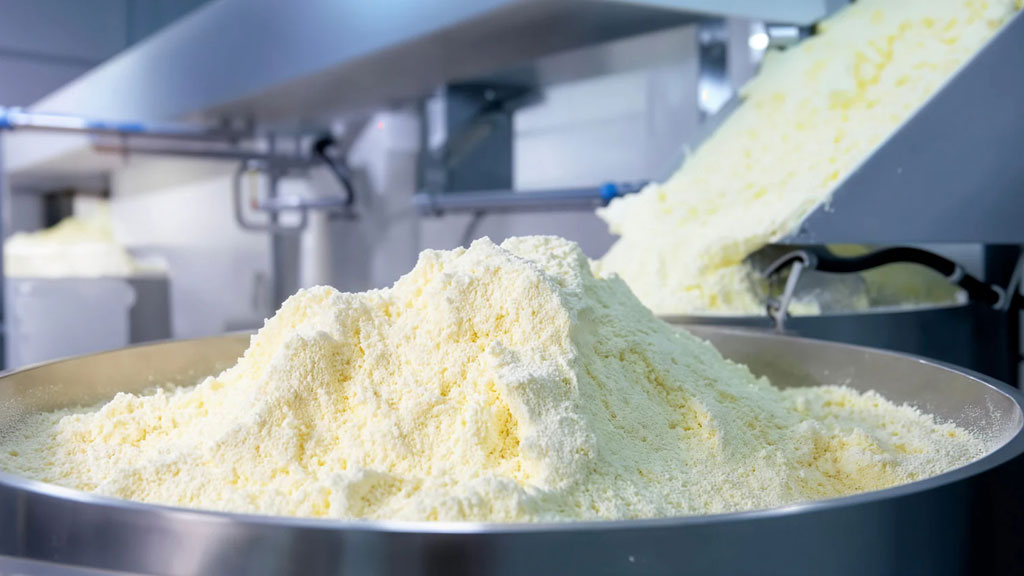
Food materials are among the most common spray-dried products due to their ability to retain flavor, nutrients, and solubility.
Typical materials include:
- Milk and dairy products (milk powder, whey protein)
- Coffee and tea extracts
- Fruit and vegetable juices
- Flavorings and seasonings
Why they are suitable:
- Naturally exist in liquid or soluble form
- Moderate viscosity after processing
- Require rapid drying to preserve nutrients
Key considerations:
- Sugar-rich materials may become sticky
- Carrier agents (e.g., maltodextrin) are often added
2.2 Pharmaceutical Materials
Spray drying is widely used in the pharmaceutical industry for producing fine powders with controlled properties.
Typical materials include:
- Antibiotics
- Vaccines
- Proteins and enzymes
- Amorphous solid dispersions
Why they are suitable:
- Require precise particle size control
- Benefit from enhanced solubility and bioavailability
- Can be processed under controlled conditions
Key considerations:
- Heat-sensitive materials demand precise temperature control
- Often processed with protective excipients
2.3 Chemical and Industrial Materials
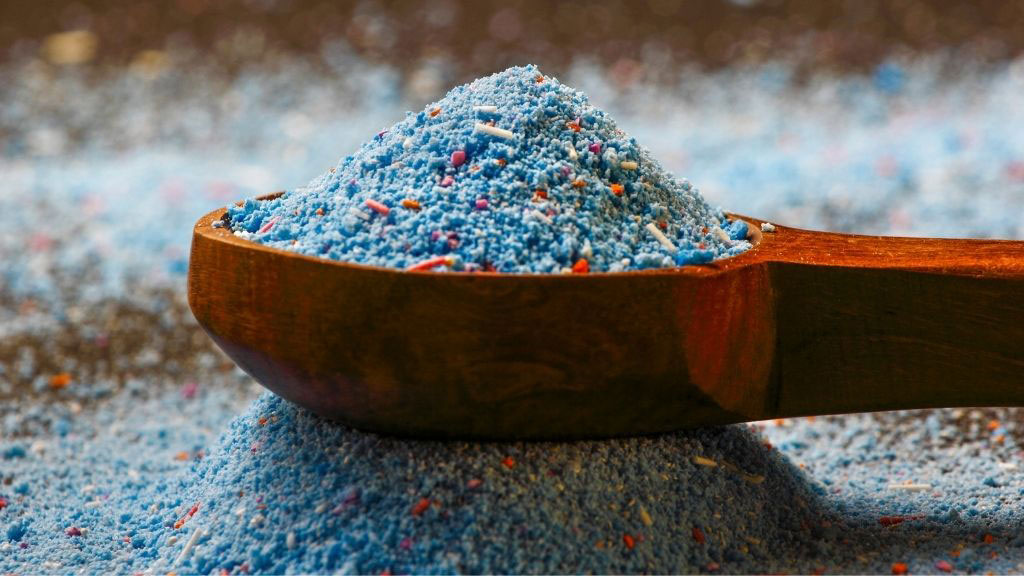
Spray drying is essential in producing uniform powders for industrial applications.
Typical materials include:
- Detergents
- Catalysts
- Ceramic slurries
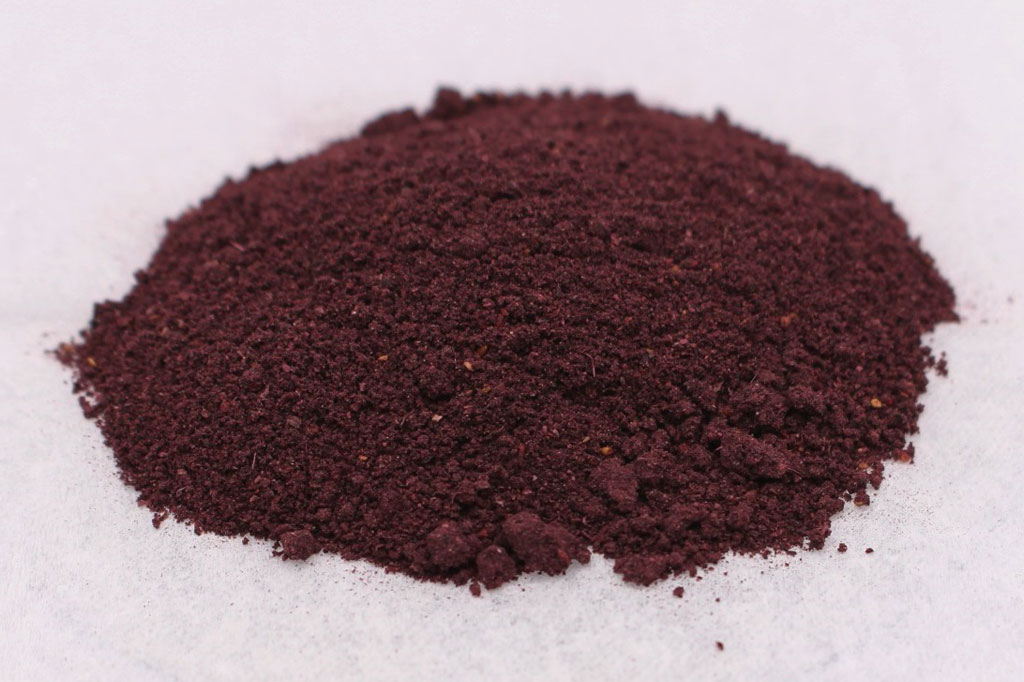
- Pigments and dyes
Why they are suitable:
- Require controlled particle morphology
- Need consistent bulk density
- Often processed as suspensions
Key considerations:
- Abrasive materials may wear equipment
- Proper dispersion is critical to avoid agglomeration
2.4 Polymer and Advanced Materials
Spray drying is increasingly used in advanced materials and polymer processing.
Typical materials include:
- Latex emulsions
- Functional polymers
- Microencapsulated materials
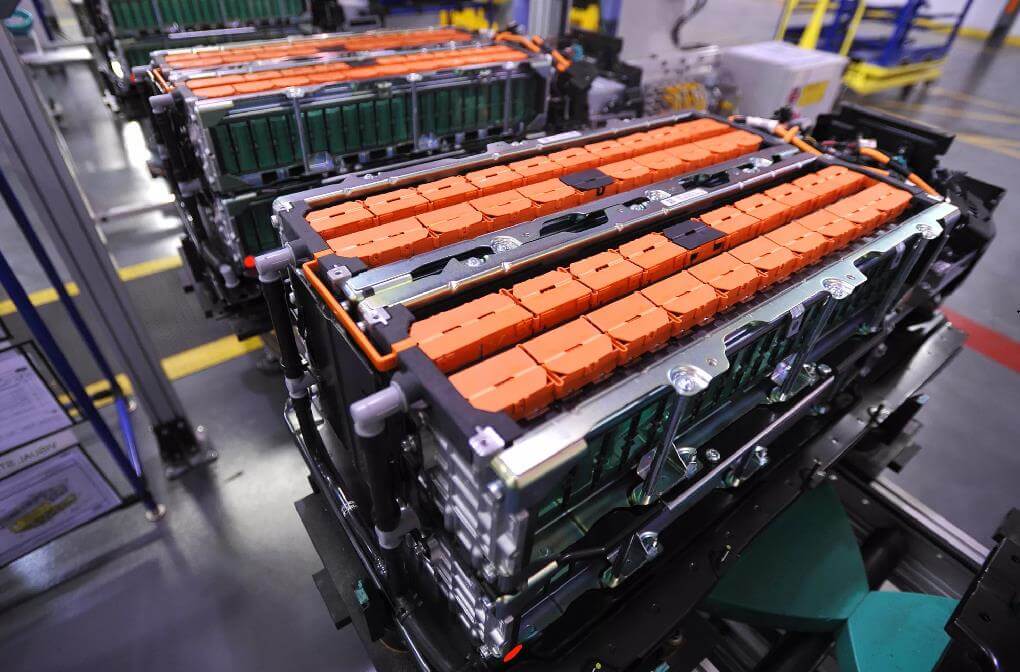
- Battery and energy materials
Why they are suitable:
- Can form uniform spherical particles
- Enable encapsulation of active ingredients
- Improve handling and storage
Key considerations:
- Thermal sensitivity of polymers
- Need for precise formulation control
2.5 Biotech and Natural Extracts
Biotech materials often require gentle drying methods to preserve activity.
Typical materials include:
- Herbal extracts
- Probiotics
- Enzymes
- Nutraceuticals
Why they are suitable:
- Spray drying preserves bioactivity when optimized
- Produces stable, easy-to-handle powders
Key considerations:
- Sensitive to heat and oxygen
- Often require encapsulation or stabilizers
3. Materials Less Suitable for Spray Drying
Not all materials perform well in spray drying. Some problematic categories include:
- Highly heat-sensitive compounds (without stabilization)
- Extremely viscous or gel-like substances
- Materials with high stickiness or low Tg
- Feeds with large, unstable particles
These materials may require pre-treatment, formulation adjustments, or alternative drying methods such as freeze drying.
FEED REVIEW
4. Assess Feed Behavior Before Choosing a Spray Drying System
Spray drying starts with a liquid, suspension or emulsion, but the feed category alone does not determine suitability. Equipment selection should consider how the material pumps, atomizes, dries and is recovered as powder.
Feed and atomization
- Feed form, pumpability and viscosity
- Solids concentration and suspension or emulsion stability
- Droplet formation and the required atomization method
- Large particles, agglomerates or ingredients that may obstruct the feed system
Thermal and drying behavior
- Initial and target moisture
- Heat sensitivity and acceptable product-temperature range
- Stickiness, glass-transition behavior and chamber-deposit risk
- Required production capacity and operating schedule
Powder recovery and handling
- Required particle characteristics and bulk density
- Fines, cyclone or filter collection and powder yield considerations
- Agglomeration, discharge and downstream conveying requirements
- Cleaning, material-contact and cross-contamination requirements
Safety and site inputs
Identify solvents, combustible dust, exhaust treatment, containment and site constraints before selecting a project-specific configuration. Safety provisions must be based on the actual material and local requirements.
Selection boundary: The material categories and examples on this page are reference information, not a blanket suitability or performance guarantee. Actual feed behavior, product requirements and operating conditions must be evaluated; representative material trials may be required.
5. Related Spray Drying Equipment
Send Your Feed Data for a Spray Drying Review
Share the feed description, viscosity, solids content, moisture target, required capacity, temperature limits, powder specification and any solvent or dust information.
6. Spray Drying Feed Selection FAQs
What feed properties should be reviewed before spray drying?
Review pumpability, viscosity, solids content, stability, heat sensitivity, stickiness, solvent information and the required powder characteristics.
Can every liquid be spray dried?
No. The feed must be evaluated for atomization and drying behavior. High viscosity, instability, heat sensitivity or fouling tendency may require formulation changes, testing or another drying route.
What happens if a feed becomes sticky during drying?
Sticky behavior can affect wall deposits, powder recovery and continuous operation. The feed formulation and process window should be reviewed with representative material before equipment selection.
What information is useful for a spray dryer inquiry?
Provide the material name, feed form, viscosity, solids content, initial and target moisture, required capacity, temperature limits, desired powder properties, solvent or dust information and site constraints.
How to Check Spray Drying Feed Suitability
Liquid, suspension and emulsion examples are starting points, not a universal approval list. Spray drying suitability depends on feed rheology, solids, heat sensitivity, atomization behavior, powder targets and the full exhaust and collection arrangement.
Characterize the feed before atomization
Provide viscosity across the expected temperature range, density, solids content, particle or droplet information, surface tension, pH, corrosivity, tendency to settle or foam and any abrasive or combustible characteristics. State whether the feed is a solution, suspension, emulsion or slurry.
Define powder quality and thermal limits
Document target moisture, particle-size distribution, bulk density, morphology, solubility, flowability, color, activity and allowable product temperature. These requirements influence atomizer selection, inlet and outlet conditions, residence time and powder recovery.
Review collection, cleaning and safety interfaces
Include exhaust limits, fines recovery, filtration, cleaning method, cross-contamination controls, solvent or dust hazards, materials of construction and downstream packaging. Sticky, foaming, highly viscous or heat-sensitive feeds may require additional testing and configuration review.
Engineering boundary: this page does not guarantee atomization, evaporation rate, throughput, powder properties or product stability for any feed. Final suitability requires representative testing or calculations, approved operating conditions and project-specific safety and quality review.
Prepare a Spray Drying Feasibility Inquiry
Send feed composition, rheology, solids, feed rate, moisture targets, product temperature limits, utilities, emissions constraints, cleaning needs, available space and acceptance method. Review spray dryer systems, design principles, cost inputs and contact requirements.
Spray Drying Material FAQs
Which feeds are commonly reviewed?
Solutions, suspensions, emulsions and slurries may be reviewed, but their rheology, solids and heat response determine the viable operating window.
Why does viscosity matter?
Viscosity affects pumping, atomization, droplet formation, drying rate and the risk of deposits or unstable operation.
What if the feed is heat-sensitive?
State the product temperature limit and quality risks early so residence time, air conditions, atomizer choice and testing can be evaluated together.
What should accompany a sample?
Include composition, rheology, solids, moisture, hazards, target powder properties, feed rate and the desired test or acceptance method.