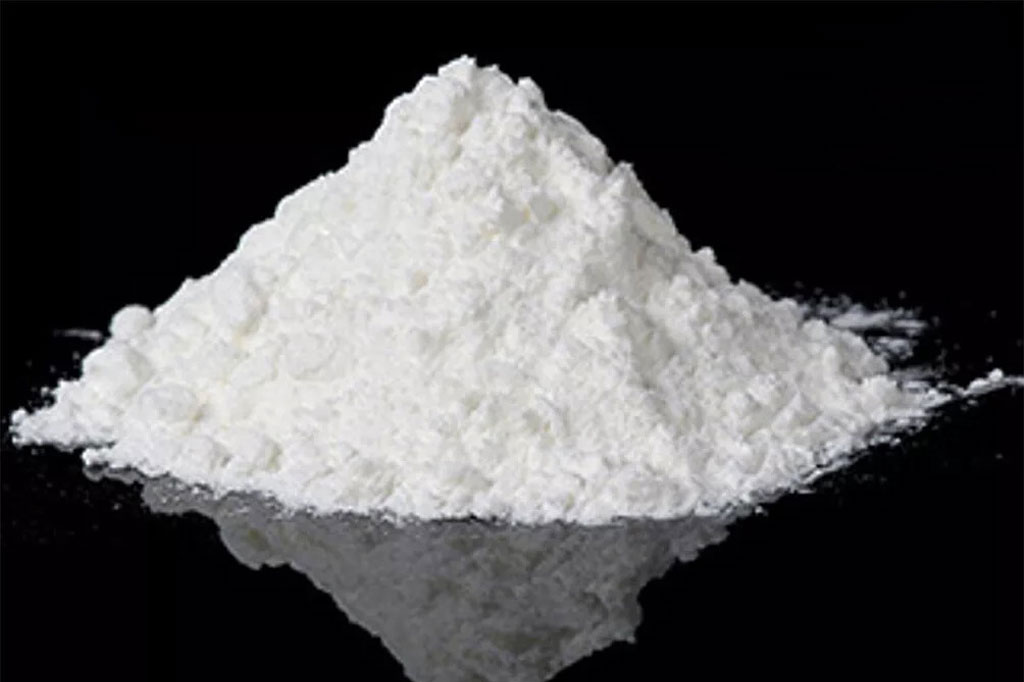
Due to the influence of the fiber-forming property of PTFE dispersion resin on its molding process, its drying process cannot be applied to the vibration drying, spray drying, fluidized bed drying and airflow drying of suspension resin, but can only be dried by oven drying, tunnel drying, vacuum drying and microwave drying, etc., where the resin is basically in a static state.
The drying quality of PTFE dispersion resin has an irreversible influence on the subsequent molding process. Fully understanding the process characteristics of PTFE dispersion resin drying is of great significance for further improving the drying process.
1. Oven Drying And Tunnel Drying
Oven drying is the most common drying method for the industrial application of PTFE dispersion resin. Oven drying is to place the material to be dried on an easily removable tray, which is fixed in a box dryer with an insulation layer on the outer wall. The material is dried by introducing hot air into the oven dryer to contact the material and remove moisture.
A higher rate of hot air has a larger heat transfer coefficient, and too high a rate of hot air may cause friction between materials or even carry out the material. Since PTFE dispersion resin has fiber-forming properties, this will not only increase costs but also reduce product quality.
Tunnel drying, also known as tunnel drying, is a process in which the material is placed in a trolley, on a conveyor belt or other free modules, and the material passes through a certain length of drying channel on the transport carrier at one time to complete the material drying process. The material is loaded and unloaded at both ends of the dryer.
Tunnel drying equipment requires a stable drying temperature to achieve the purpose of drying, which requires a stable heat source. In the drying of PTFE dispersion resin, the heat source is basically filtered clean steam. The heat source can be reused in the form of multiple cycles, intermediate heating, and multi-stage recirculation.
Considering the disassembly, maintenance, and monitoring of tunnel drying equipment, the drying channel of tunnel drying is mostly assembled and spliced with modules, which is a test for the thermal insulation performance of the drying channel.
2. Vacuum Drying
Vacuum drying is a process of controlling drying according to the relationship between ambient pressure and the boiling point of the solvent. Compared with other drying forms, vacuum drying has the advantages of small equipment size, low process exhaust volume, and simple installation and layout of the device. In addition, vacuum drying has the convenience of operating at low temperatures, which has obvious advantages for scarce materials that cannot be dried by heating. In the production process of PTFE dispersion resin, vacuum drying and oven drying are often combined.
However, during the drying process, due to the presence of acidic and alkaline substances such as additives and emulsifiers, the airtightness and stability of the vacuum system are greatly reduced, which has a great impact on the quality of the product and the production efficiency of the system.
The fiber-forming property of PTFE dispersion resin makes it only possible to use static vacuum drying in the selection of vacuum drying. The time and vacuum degree of static vacuum drying are proportional to the severity of resin agglomeration. The agglomeration of PTFE dispersion resin has a fatal effect on the molding and processing of PTFE. The higher the proportion of agglomeration, the greater the probability of defects such as cracking and convex spots in the product, and it may even be unusable.
3. Belt Drying
Belt drying is a drying technology derived from tunnel drying. It is a technology that places the material to be dried on the conveyor belt in the drying channel and conducts mass and heat transfer with the heat source in the channel to achieve material drying. Belt drying equipment usually consists of multiple independent drying units.
The process parameters of each unit can be controlled separately, so that the parameters of the entire belt drying process system can be set in a step-by-step combination, ensuring the superiority, reliability and flexibility of the drying process. During the belt drying process of PTFE dispersed resin, 180 ℃ steam is introduced into the cloth track support layer with excellent heat transfer performance as the drying heat source, and industrial water at about 5 ℃ is introduced as the cooling medium for the resin.
The drying channel is assembled in a unit structure that is easy to disassemble, and the entire drying channel is in a closed environment.
Relatively speaking, the production efficiency of PTFE dispersion resin belt drying has a very obvious advantage, but belt drying is less used in the industrial application of PTFE dispersion resin, mainly because the feeding and discharging packaging procedures of PTFE dispersion resin in belt drying are very cumbersome, requiring a lot of manpower and material resources, and unexpected situations have a particularly obvious impact on product quality.
In addition, the high cost of overhaul and maintenance of belt drying devices is also an important factor affecting its difficulty in popularizing the application of PTFE dispersion resin drying.
PROCESS REVIEW
4. Select a PTFE Dispersion Resin Drying Route from Material Data
Oven, vacuum and belt drying describe different process routes, but the preferred system cannot be selected from the material name alone. Review the wet feed, required powder condition, handling sensitivity and plant constraints together.
Feed condition and handling
- Wet-cake form, incoming moisture and batch consistency
- Particle or agglomerate sensitivity during feeding and discharge
- Tendency to compact, smear, adhere or generate fines
- Permitted material-contact surfaces and cleaning requirements
Drying duty and product target
- Target moisture and acceptable residence-time range
- Product-temperature limit and thermal-history requirements
- Required capacity, batch size or continuous throughput
- Expected powder handling after drying
Atmosphere, exhaust and safety review
Confirm the volatile components present in the wet feed, exhaust-treatment needs, containment, dust handling and site requirements before equipment configuration. Any vacuum, inerting or special protection requirement must be determined from the actual process and applicable local standards.
Engineering boundary: This page compares general drying routes. It does not establish a universal PTFE process window or guaranteed product result. Final equipment selection and operating conditions require project-specific material data and may require representative trials.
5. Related Equipment for Process Comparison
Discuss Your PTFE Drying Requirement
Send the wet-feed condition, incoming and target moisture, required capacity, temperature limits, volatile information and preferred operating mode for an engineering review.
6. PTFE Dispersion Resin Drying FAQs
Which drying method is best for PTFE dispersion resin?
There is no universal answer. The choice depends on the wet-feed form, moisture-removal duty, product-temperature limit, handling sensitivity, required capacity and plant constraints.
When should vacuum drying be evaluated?
Vacuum drying may be evaluated when the project requires reduced-pressure operation or a lower-temperature process route. Suitability still depends on heat and mass transfer, feed behavior and the required product condition.
What should be checked before selecting a belt dryer?
Review whether the feed can be distributed consistently, how it behaves on the belt, the required residence time, discharge characteristics, cleaning needs and the available exhaust or vacuum system.
What data should be provided for an engineering review?
Provide the resin and wet-feed description, incoming and target moisture, temperature limits, required capacity, batch or continuous preference, volatile information, material-handling observations and site requirements.
PTFE Dispersion Resin Drying: Project Evaluation
Drying PTFE dispersion resin requires a product-specific review of feed condition, thermal limits, moisture targets, powder handling and contamination controls. Oven, tunnel, vacuum and belt approaches should be compared against the same process brief rather than selected from a generic equipment list.
Define resin condition and product targets
Provide solids content, feed form, batch or continuous duty, initial and target moisture, allowable temperature, residence-time sensitivity, bulk-density target, particle or agglomerate requirements and any downstream molding or compounding constraints.
Review heat, airflow and gentle handling
Discuss heating method, air distribution, exhaust routing, loading depth, belt or tray movement, transfer points and cooling needs. The design should limit unwanted agglomeration, contamination, dust release and product damage within the approved operating window.
Plan quality, cleaning and safety controls
Include materials of construction, cleaning validation or changeover needs, filtration, dust containment, electrical and temperature protection, instrumentation, sampling locations and document control. Confirm the applicable site, environmental and process-safety requirements with the responsible specialists.
Engineering boundary: this article does not guarantee resin properties, drying time, throughput, moisture, purity or product performance. Final selection requires representative data, calculations or trials, approved operating conditions and project-specific quality and safety review.
Prepare a PTFE Resin Drying Inquiry
Send resin data, feed rate, solids, moisture range, temperature limits, product targets, utilities, floor space, cleaning requirements, emissions constraints and acceptance method. Review belt dryer systems, material suitability guidance, project references and contact requirements.
Discuss PTFE Resin Drying Requirements
PTFE Dispersion Resin Drying FAQs
Which drying method is best?
There is no universal answer. Compare thermal sensitivity, feed form, moisture duty, handling, cleaning, utilities and acceptance criteria for the specific resin.
What product data matters most?
Solids, moisture, feed rate, temperature limits, bulk-density or agglomerate targets and downstream processing requirements are key starting inputs.
How can contamination be controlled?
Define materials of construction, cleaning or changeover procedure, filtration, sampling and document-control requirements before equipment selection.
Should trials be considered?
When feed behavior or product quality is uncertain, representative testing or a controlled trial can reduce scale-up risk before final approval.