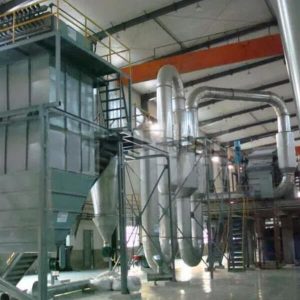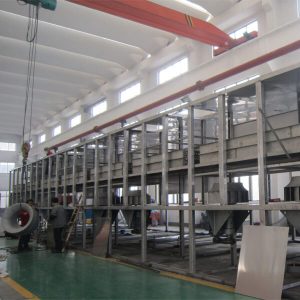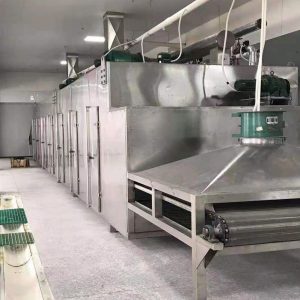
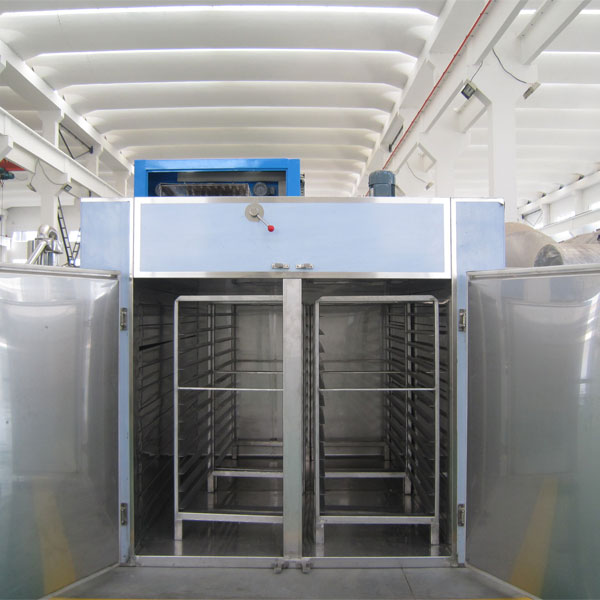
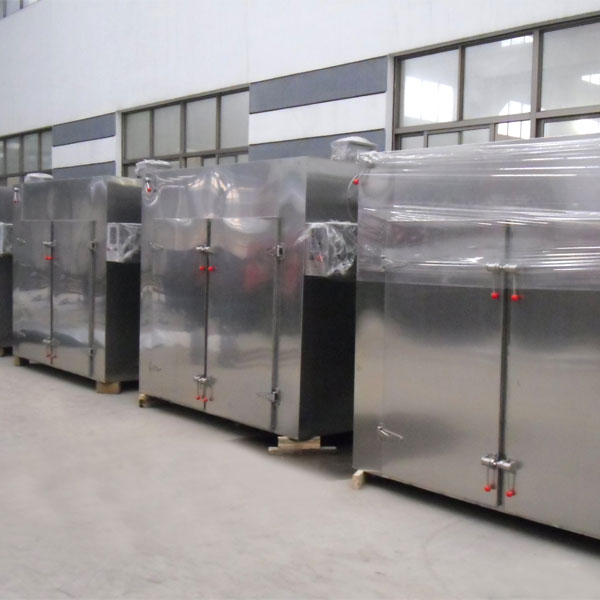
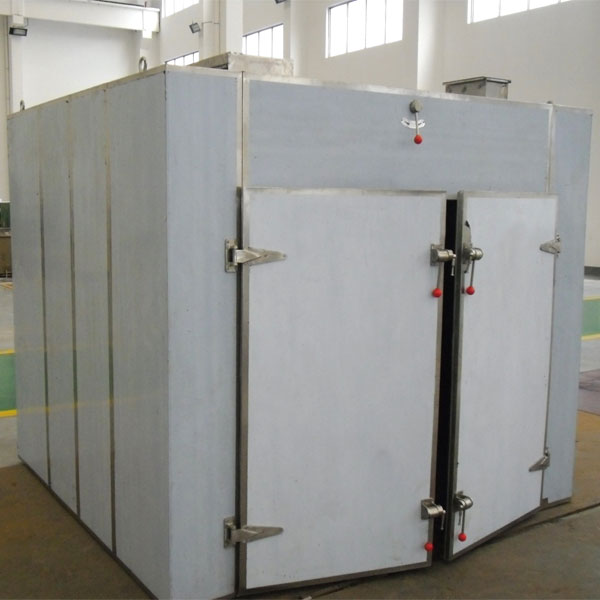
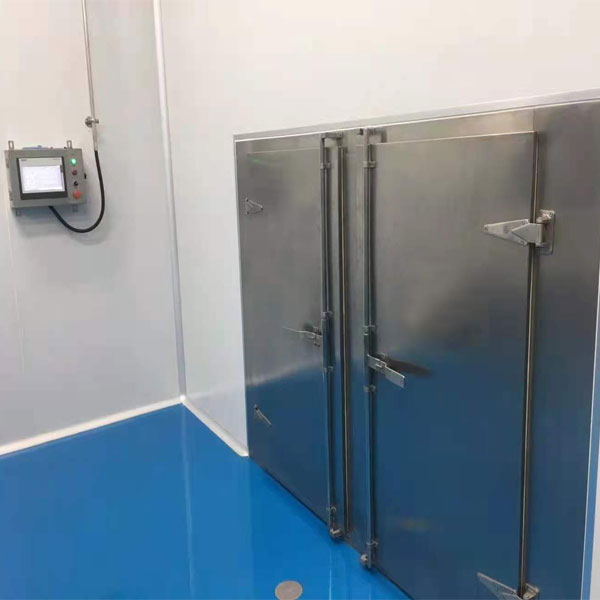
Hot Air Circulating Oven Internal Structure
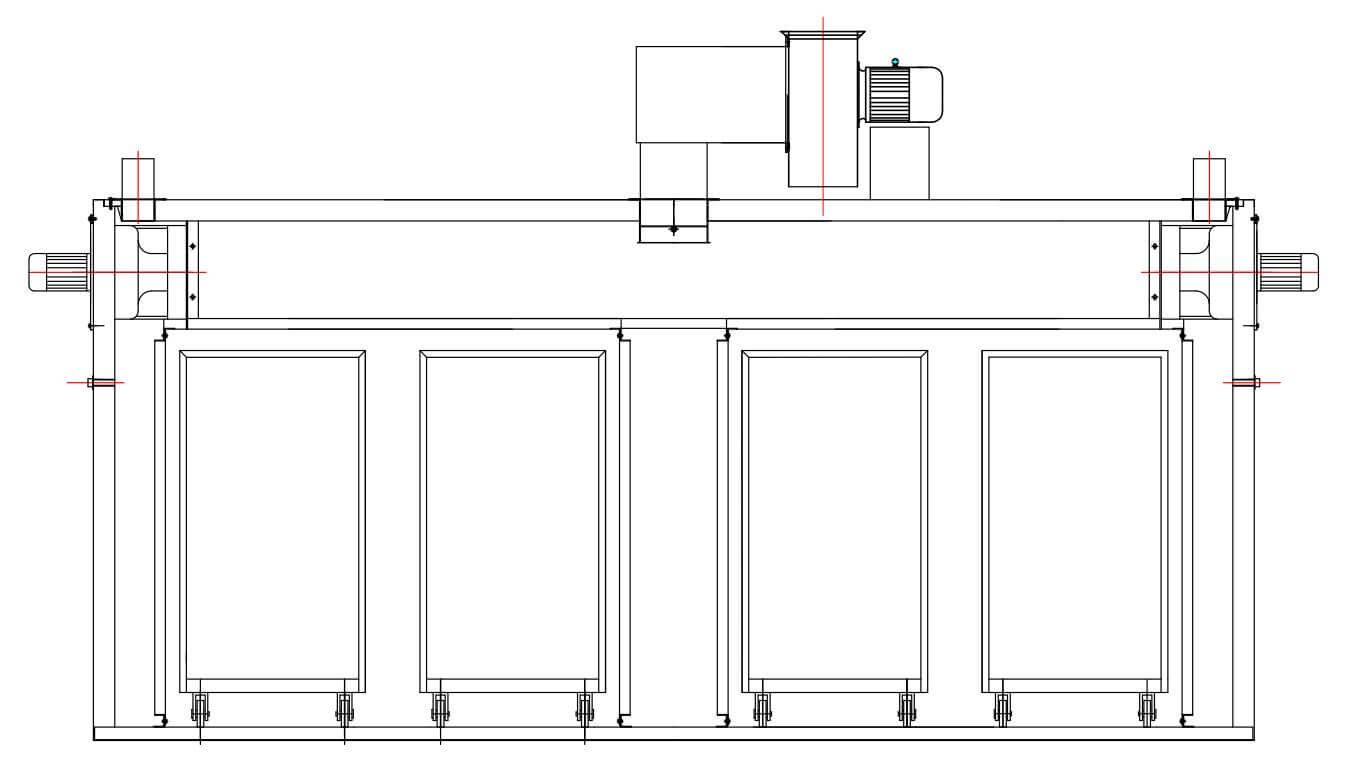
Our oven body adopts two side air inlet, and back through the middle. The hot air circulation route is shorter to ensure a uniform temperature in the box body.
It is easy to clean and distribute the air evenly. Collect the hot air track of 2000 hot air circulation ovens and choose the best punching ratio to ensure the uniformity of air distribution between the inlet and outlet.
Technical Parameter
| Model | Evaporation Area(㎡) | Efficient Volume(㎡) | Drying Capacity(kg/batch) | Radiator Area(㎡) | Electric Heating Power(kw) | Fan Volume(㎡/h) | Fan Power(kw) |
| CT-C-O | 7.1 | 1.3 | 60 | 15 | 6-9 | 4510 | 0.45 |
| CT-C-Ⅰ | 14.1 | 2.6 | 120 | 23 | 15 | 4510 | 0.45 |
| CT-C-Ⅱ | 28.3 | 4.9 | 240 | 48 | 30 | 9020 | 0.45×2 |
| CT-C-Ⅲ | 42.4 | 7.4 | 360 | 60 | 45 | 13530 | 0.45×3 |
| CT-C-Ⅳ | 56.5 | 10.3 | 480 | 96 | 60 | 18040 | 0.45×4 |
| CT-Ⅰ | 14.1 | 2.6 | 120 | 23 | 15 | 1414 | 1.1 |
| CT-Ⅱ | 28.3 | 4.9 | 240 | 48 | 30 | 5230 | 1.1 |
| CT-Ⅲ | 42.4 | 7.4 | 360 | 72 | 45 | 9800 | 2.2 |
BATCH TRAY DRYING
How a Hot Air Circulating Oven Dries Tray-Loaded Material
Material is loaded into trays at a controlled layer depth and placed in the oven chamber. Heated air is circulated across or through the tray load, while a controlled portion of humid air is exhausted and replaced as required. Temperature, airflow, loading and cycle time are coordinated to reach the target product condition.
1. Prepare and Load Trays
Tray size, material layer depth, loading pattern and cart arrangement are selected for handling and airflow.
2. Heat and Circulate Air
The heater and circulation fan provide the selected air temperature and flow through the chamber.
3. Remove Moisture
Exhaust and fresh-air settings are evaluated from the moisture load, humidity profile and facility conditions.
4. Complete and Unload the Batch
The cycle ends after the material meets the confirmed moisture, temperature or quality criteria.
ENGINEERING SELECTION
Hot Air Circulating Oven Selection Requirements
Batch and Tray Loading
Batch size, product form, tray dimensions, loading depth, number of trays, cart handling and changeover needs.
Thermal Cycle
Initial and target moisture, temperature limit, required cycle time, heating method and cooling or hold requirements.
Airflow and Humidity
Air direction, circulation volume, exhaust rate, humidity removal and acceptable variation between tray positions.
Hygiene and Facility
Contact materials, cleanability, filtration, controls, utilities, room classification, door access and installation country.
Request a Tray Dryer Oven Review
Send batch, tray-loading, moisture, temperature and heat-source data for an application-specific review.
TECHNICAL QUESTIONS
Hot Air Circulating Oven FAQs
What materials can be evaluated in a hot air circulating oven?
A tray oven can be evaluated for suitable solids, pieces, granules, powders or formed wet materials that can be loaded in trays and dried in batches. Layer depth, airflow resistance, stickiness, contamination control and thermal sensitivity must be reviewed.
How is drying uniformity evaluated in a tray dryer oven?
Uniformity depends on tray loading, material layer depth, airflow distribution, fan performance, air temperature, exhaust or humidity removal and the position of every tray. The operating method and product acceptance criteria should be defined for the application.
When should a tray oven be compared with a mesh belt dryer?
A tray oven supports batch loading, product changeover and flexible residence time. A mesh belt dryer supports continuous conveying. Required throughput, labor, traceability, cleaning, product handling and available space determine which method should be evaluated.
What information is needed for a hot air circulating oven proposal?
Provide material name and form, batch size, tray loading depth, initial and target moisture, temperature limit, required cycle time, heat source, airflow or exhaust needs, tray and contact materials, cleaning requirements, utilities and installation country.