
Drying in Pharmaceutical Engineering

Pharmaceutical dryer selection starts with the product form and required process duty, not with one universal machine type. Pumpable liquids may be evaluated for spray drying; fluidizable powders or granules for fluid-bed processing; tray-loaded batches for hot-air or vacuum drying; and products requiring frozen-state moisture removal for freeze drying. Confirm formulation, initial and target moisture, product-temperature limits, batch size or throughput, cleaning, containment, utilities, facility interfaces and required project documentation before equipment selection.

Dryers are an essential piece of equipment in the pharmaceutical industry, as they are used to remove moisture from products, including powders, granules, and crystals.

There are various types of dryers suitable for the pharmaceutical industry, including: spray dryers, fluidized bed dryer, tray dryers, vacuum dryers and freeze dryers.

According to your product's physical and chemical properties, the drying time, the level of moisture removal and other requirements, we can provide you with the best drying solution.

    Spray Dryer in Pharmaceutical Industry
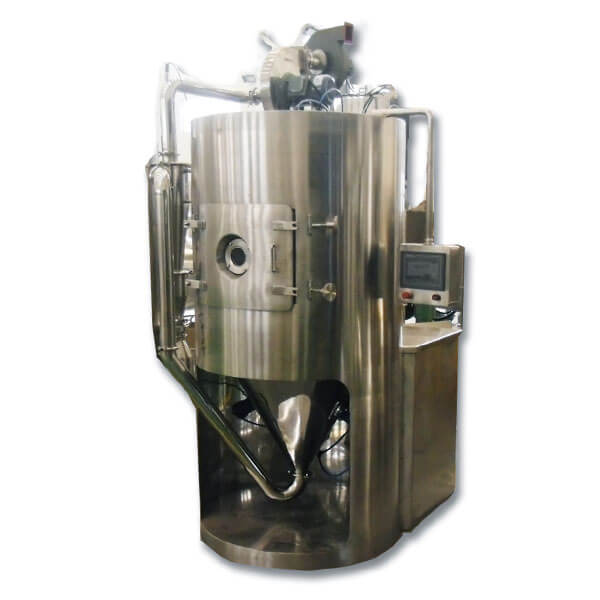
    Centrifugal Spray Dryer

    Spray drying is a commonly used technique in the pharmaceutical industry for converting liquid drugs into a dry powder form.

    The pharmaceutical industry uses spray dryers for a variety of applications, including the production of inhalable dry powders for respiratory drugs, the manufacture of tablets and capsules, and the production of powders for intravenous administration. Spray drying can also be used to produce microencapsulated drugs, which protect the active ingredient from degradation and improve bioavailability.

    They are suitable for producing uniform and free-flowing powders, and they are especially suitable for heat-sensitive materials.

      Fluidized Bed Dryer in Pharmaceutical Industry

      In the pharmaceutical industry, fluidized bed dryers are used to dry a wide range of products, including active pharmaceutical ingredients (APIs), excipients, and other raw materials. They are also used to dry finished products, such as tablets and capsules, before packaging.

      Fluidized bed dryers also provide better control over the drying process, as the temperature, humidity, and air flow can be adjusted according to the requirements of the material being dried.

      The fluidized bed provides excellent mixing and heat transfer, making it an ideal choice for drying heat-sensitive materials, so it can handle a wide range of materials, from fine powders to granules and pellets.
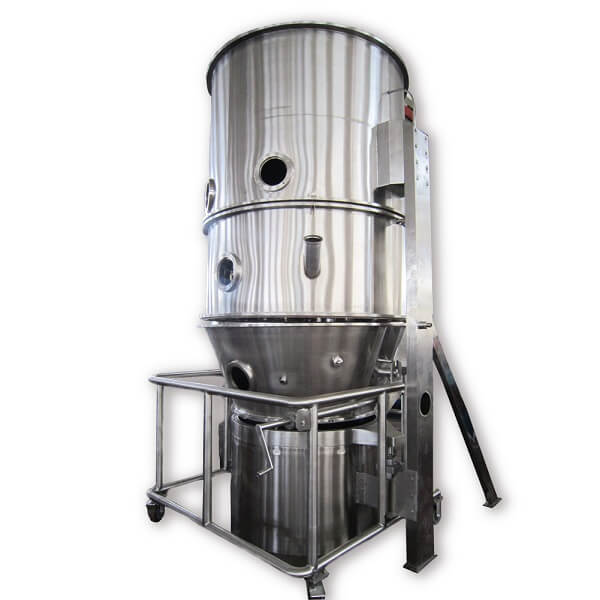
        Batch Fluid Bed Dryer

        Tray Dryer in Pharmaceutical Industry
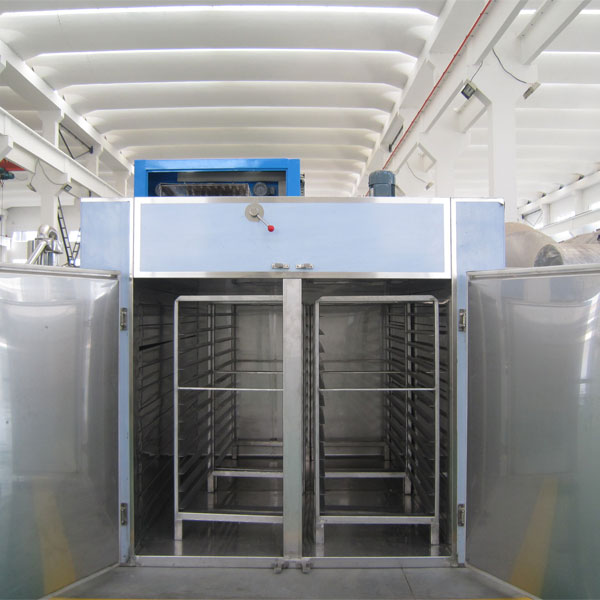
        Tray Dryer Oven

        Tray dryers are popular in the pharmaceutical industry because they are relatively simple to operate, require minimal maintenance, and can be used for a wide range of products. They are also flexible, as the temperature and drying time can be adjusted to suit the specific requirements of the product being dried.

        In addition, it has ability to dry delicate materials such as antibiotics and other heat-sensitive compounds. The trays in the dryer are designed to minimize damage to the material being dried, ensuring that the final product is of high quality.

        Tray dryers are cost-effective and easy to operate, but they are not suitable for large-scale production.

          Vacuum Dryer in Pharmaceutical Industry

          Vacuum dryers are commonly used in the pharmaceutical industry for the drying of heat-sensitive materials as it minimizes the risk of thermal degradation, such as pharmaceutical powders, granules, and other solid dosage forms.

          One of the main advantages of vacuum dryers in the pharmaceutical industry is that they can be designed to prevent cross-contamination between batches. The drying chamber can be isolated from the external environment, ensuring that there is no contamination from the surrounding air or other materials.
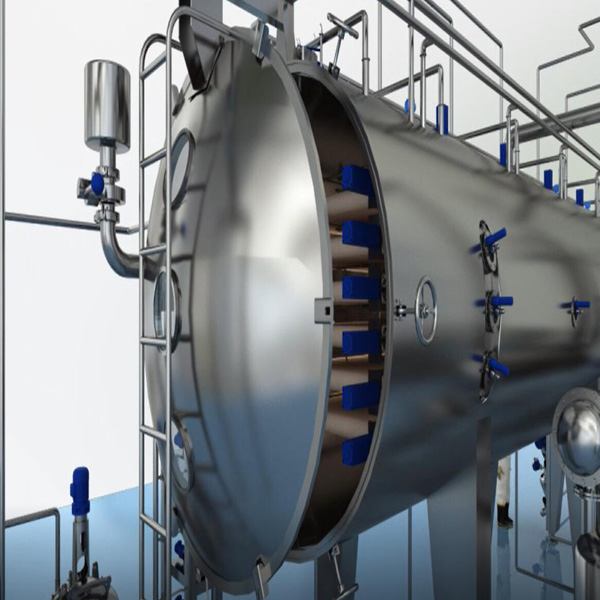
            Vacuum Belt Dryer (4)

            Freeze Dryer in Pharmaceutical Industry
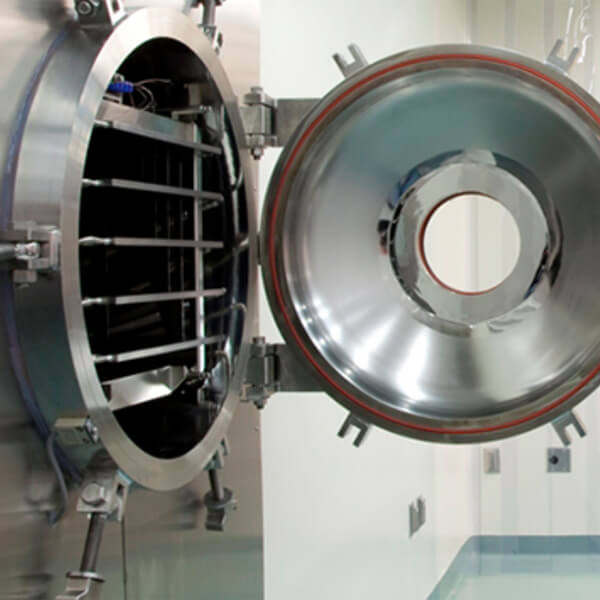
            Vacuum Freeze Dryer

            Vacuum freeze drying, also known as lyophilization, it is a slow process, but it is ideal for preserving the biological activity of pharmaceutical products, such as vaccines and enzymes.

            Vacuum freeze drying is particularly useful for preserving biological materials that are sensitive to heat or moisture, as it can be done at low temperatures, typically below -50°C, and in a low-humidity environment. This helps to maintain the structural integrity and activity of the material.

              Contact Us

              Get in touch with us now. Our team is ready to help you find the right solution for your pharmaceutical drying project.
              Industrial Dryer Factory

                EQUIPMENT SELECTION

                Match the Pharmaceutical Feed to the Drying Method

                Pumpable Liquid Feed

                Review formulation, viscosity, atomization and powder target before evaluating spray drying.

                Granules or Fluidizable Solids

                Assess particle size, attrition, containment and batch controls for a fluid bed drying system.

                Tray-Loaded Batch

                Define loading depth, air pattern, cleaning and endpoint needs when considering a tray drying oven.

                QUALITY AND PROJECT INPUTS

                Data Required for a Pharmaceutical Drying Review

                Product and Cycle

                Formulation, feed form, batch or hourly duty, initial and target moisture, allowable temperature, drying endpoint and representative sample data.

                Product Contact and Cleaning

                Construction material, surface finish, seals, cleaning method, drainage, access, changeover, cross-contamination and residue limits.

                Containment and Facility

                Potency or exposure data, dust or solvent hazards, room classification, pressure regime, filtration, exhaust, utilities and installation constraints.

                Controls and Documentation

                Automation, recipes, alarms, data recording, user access, required certificates, FAT/SAT expectations, qualification support and applicable standards.

                Discuss a Pharmaceutical Drying Project

                Send product, cycle, containment, cleaning, documentation and utility requirements for a configuration review.

                Send Pharmaceutical Process Data

                TECHNICAL QUESTIONS

                Pharmaceutical Drying FAQs

                How is drying equipment selected for a pharmaceutical product?

                Selection depends on feed form, formulation, initial and target moisture, allowable product temperature, batch or continuous duty, containment, cleaning, product-contact requirements and the applicable quality system. Representative trials and cycle development may be required.

                Does pharmaceutical use make a standard dryer GMP compliant or sterile?

                No. GMP suitability, qualification and sterility assurance depend on the complete equipment configuration, facility, utilities, procedures, cleaning, contamination controls, documentation and validation program. These requirements must be defined for the specific project.

                When should vacuum or freeze drying be evaluated?

                Vacuum drying may be evaluated when lower-pressure moisture or solvent removal is useful for a suitable heat-sensitive batch. Freeze drying may be evaluated when a frozen product and controlled sublimation cycle are required. Neither route guarantees product stability, activity or shelf life.

                What data is needed for a pharmaceutical drying review?

                Provide formulation and feed form, batch or hourly capacity, initial and target moisture, temperature limits, solvent data, containment and room classification, cleaning method, product-contact finish, utilities, controls, documentation, qualification scope and installation country.

                Shopping Cart