Select an industrial vegetable drying machine from the prepared product form and required drying duty. Slices, dice and prepared pieces may be evaluated for continuous mesh-belt drying, while smaller or flexible batches may suit a hot-air circulating oven. Vacuum drying can be considered when a lower-temperature batch route is required. Confirm the vegetable variety, washing and cutting steps, piece size, loading, initial and target moisture, product-temperature limit, throughput, food-contact and cleaning requirements, utilities and downstream handling before equipment selection.

Industrial Vegetable Drying Machine

Bulk-drying vegetables with industrial drying equipment to preserve vegetables for longer shelf life, reduce transportation costs, and maintain nutritional value.

Industrial vegetable dryers are often required to be energy-efficient and to maximize drying speed while minimizing damage to the vegetables.

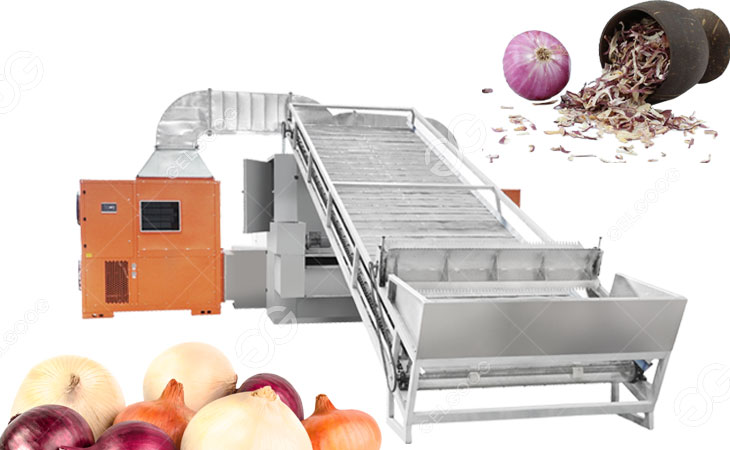
    Mesh Belt Dryer for Vegetable Drying

    Mesh Belt Drying for Vegetables

    Mesh belt dryers are a highly efficient and effective way to dry vegetables, they are commonly used for drying a wide range of vegetables and fruits, including onions, garlic, peppers, tomatoes, carrots, potatoes, and mushrooms.

    Pros

    • Efficient & uniform drying
    • Continuous process
    • High capacity
    • Versatile

    Cons

    • Limited control over the drying process
    • Energy consumption
    • Maintenance
    • Space requirement

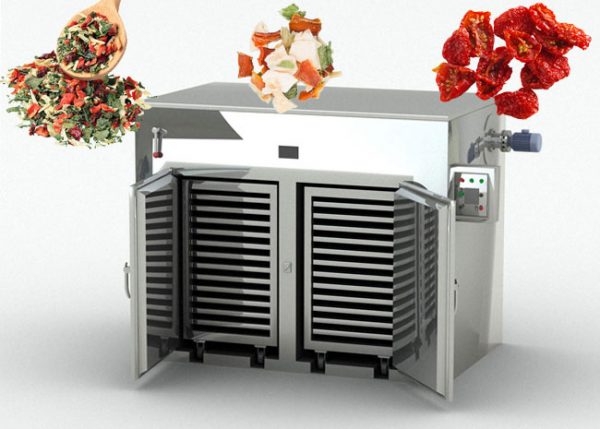
      Hot Air Circulating Oven for Vegetable Drying

      The vegetables are placed on trays or racks and the hot air circulates around them, drying them evenly. You can control the temperature and humidity of the oven to ensure that the vegetables are dried in the optimal environment.

      Pros

      • Faster drying
      • Retain nutrients
      • User-friendly

      Cons

      • Potential for over-drying
      • Limited capacity

        Hot Air Circulating Oven for Drying Vegetables

        Contact Us

        Get in touch with us now. Our team is ready to help you find the right solution for your vegetable drying project.
        Industrial Dryer Factory

          PROCESS SELECTION

          Choose a Vegetable Drying Route by Product Form

          Heat-Sensitive Batch Product

          Define batch size, pressure, vapor duty and quality target before evaluating a vacuum drying system.

          Specialized Frozen Product

          Review freezing behavior, loading, condenser duty and finished-product target for a vacuum freeze dryer.

          PRODUCT AND PROJECT INPUTS

          Data Required for a Vegetable Drying Review

          Raw Material and Preparation

          Vegetable type, maturity and seasonal range, washing, peeling, cutting, blanching or other pretreatment, cut dimensions and drain condition.

          Drying and Quality Target

          Initial and final moisture, water activity, allowable temperature, color, texture, shrinkage, rehydration and acceptable batch variation.

          Food Contact and Cleaning

          Contact materials, belt or tray access, cleaning and sanitation method, drainage, allergen or cross-contact controls and applicable food-safety requirements.

          Capacity and Line Interface

          Hourly input, operating schedule, utilities, room conditions, upstream preparation, cooling, sorting, packaging interface and installation country.

          Discuss a Vegetable Drying Project

          Send vegetable form, preparation, moisture, quality target, capacity, cleaning and line-interface data for review.

          Send Vegetable Drying Data

          TECHNICAL QUESTIONS

          Vegetable Drying FAQs

          Which dryer is commonly evaluated for sliced vegetables?

          A mesh belt dryer can be evaluated for prepared vegetable pieces that can be distributed in a controlled layer for continuous drying. Belt speed, bed depth, air condition and staging depend on the vegetable, cut size, loading and outlet target.

          When is a tray or hot-air circulating oven useful?

          A tray or circulating oven may be useful for smaller batches, multiple product formats or flexible campaigns. Loading uniformity, tray spacing, airflow, temperature control, cleaning and batch endpoint should be evaluated.

          Does a vegetable dryer guarantee nutrients, color or shelf life?

          No. Nutrient retention, color, texture, microbiological condition and shelf life depend on raw material, washing and preparation, pretreatment, drying profile, final moisture or water activity, hygiene, cooling, packaging and storage.

          What data is needed for a vegetable drying proposal?

          Provide vegetable type and condition, preparation and pretreatment, cut dimensions, initial and target moisture or water activity, input capacity, temperature limit, color and texture target, cleaning requirements, utilities, cooling and packaging conditions.

          Shopping Cart